.avif)



Blog Posts
Clean Slate Clinic wins Impact Enterprise of the Year
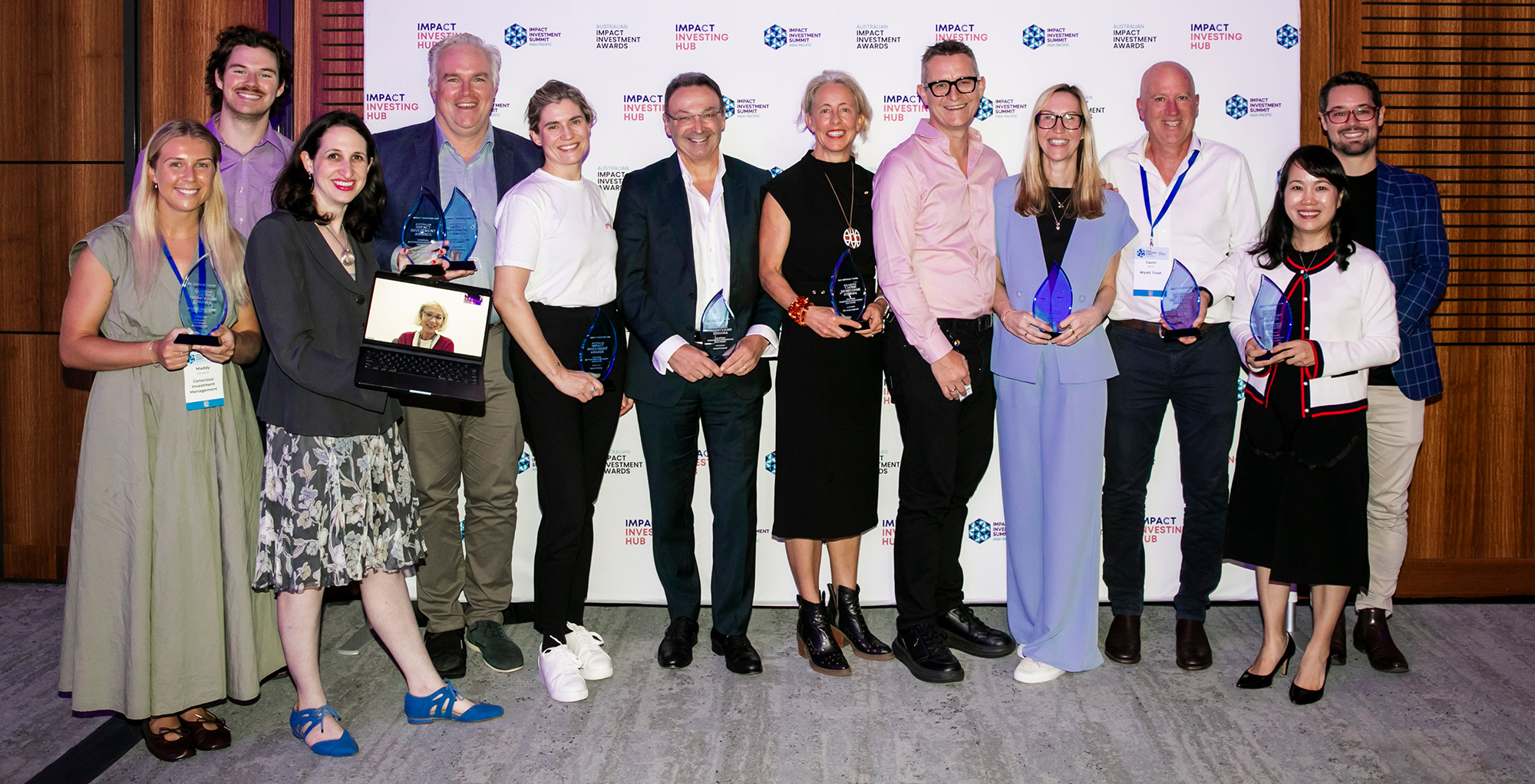
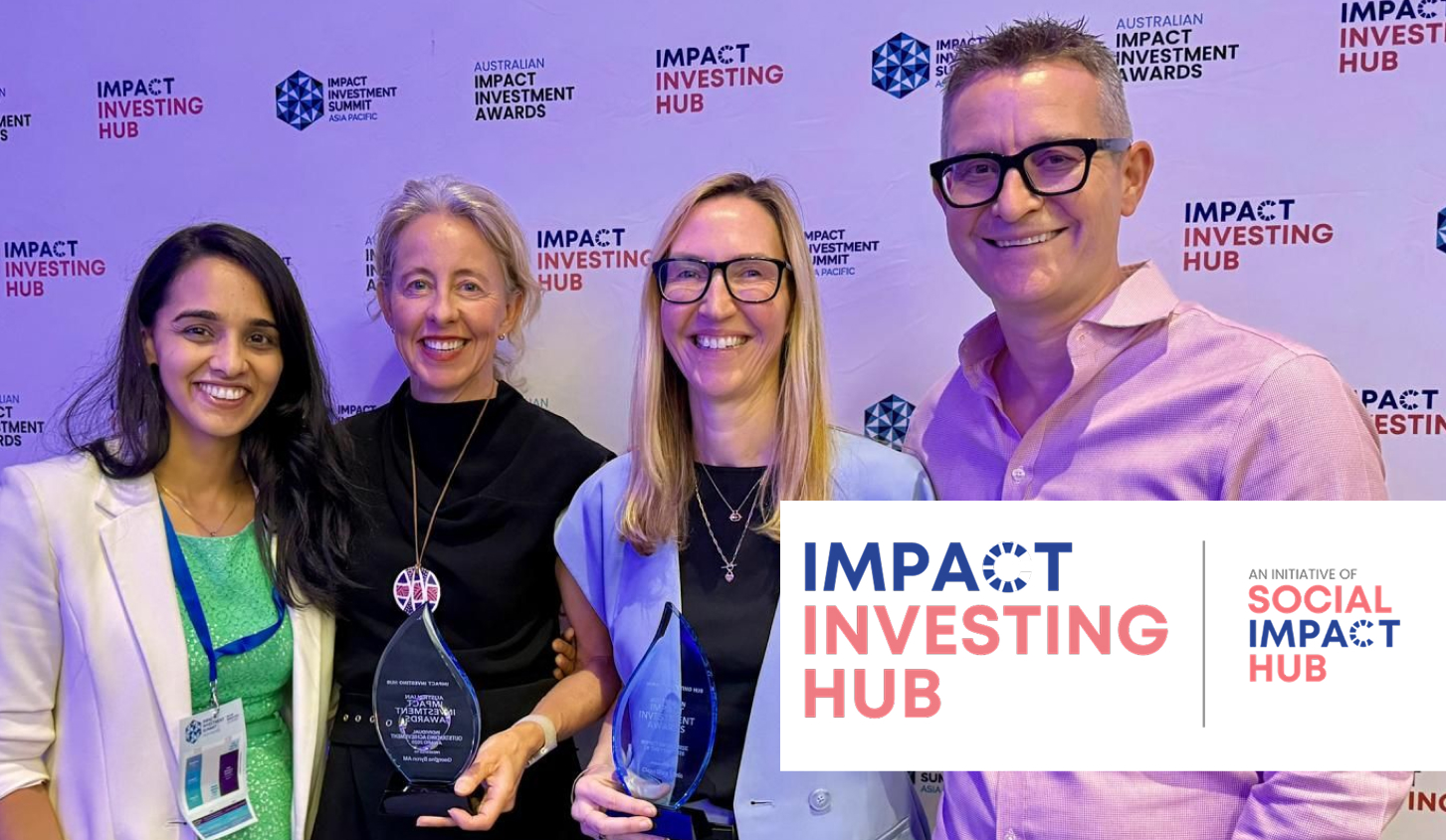
Clean Slate Clinic has been named Impact Enterprise of the Year at the 2026 Australian Impact Investment Awards.
At Clean Slate, we believe that people shouldn't have to wait until they hit rock bottom to access support for alcohol and other drug dependence. Winning this award affirms that a different approach - one built on early intervention, compassionate care, and accessible technology - can make a real difference at scale. We're so proud of every single member of our team who shows up every day to make that a reality.
We also want to take a moment to celebrate two of our key partners whose achievements were also recognised last night.
Our supporters and investors, the Snow Foundation, and their CEO Georgina Byron AM, received the Individual Outstanding Achievement Award, celebrating Georgina's remarkable vision in championing impact investment as a force for lasting social good. Congratulations to the whole Snow team.
Our funding partner Sefa, and their CEO Hanna Ebeling, CFA also received the Individual Outstanding Achievement Award - a recognition of Hanna's leadership in driving meaningful change across Australia's impact investment landscape and her belief in funding approaches that truly move the needle.
Thank you to the Impact Investing Hub, Social Impact Hub, and the Australian Government Department of Social Services (DSS) for hosting and sponsoring these awards, and for championing the role of impact investment in building a healthier, more equitable Australia.

Rod's Story
“I’ll quit tomorrow”
For ten years, Rod told himself the same lie every single night.
“I’d go to bed every night thinking, ‘I’m gonna give it up tomorrow,’” he says. “But it never happened.”
Tomorrow became the next day, which became the next week, which became another year. The promise was always there sitting just out of reach, waiting for some perfect moment that never arrived.
“You just think you can, but you can’t,” Rod reflects now.
By the time Rod reached out for help, he’d been drinking heavily for 50 years. An entire adult life built around alcohol. But then one morning in late January, something shifted.
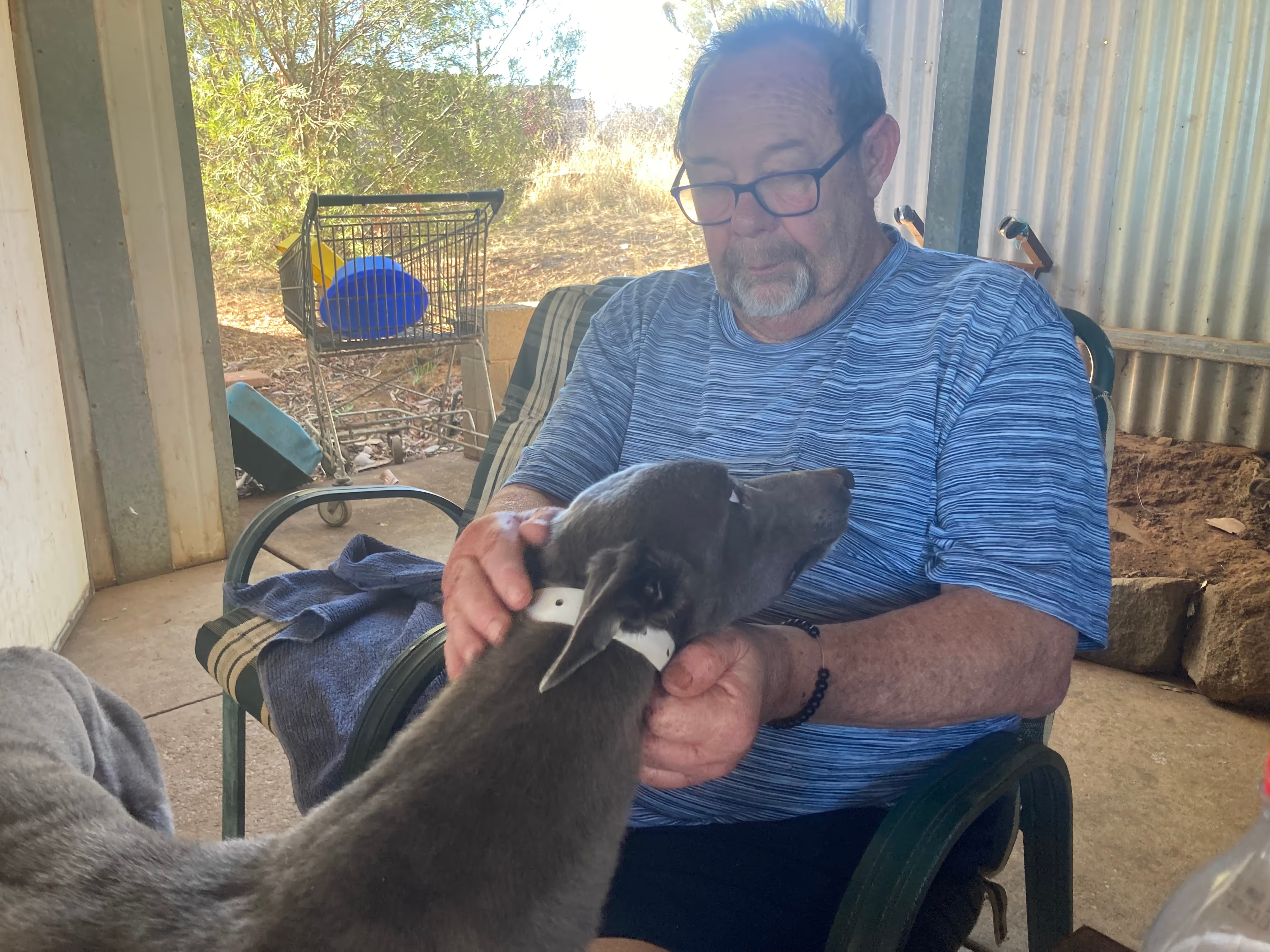
Fifty years of normal
Rod started drinking at 17. It was just part of the culture in the building industry, surrounded by “tradies” who were all drinkers.
“It didn’t matter what day it was,” he remembers. “You’d go anywhere and there were always a few beers. It just went together.”
It wasn’t questioned and it wasn’t a problem - it was just how you lived. Then that pattern became an automatic, daily routine.
“The first thing I did in the morning was get up, walk to the fridge and see how many drinks I had for that day,” he explains. “If I didn’t have enough by 10 o’clock, I’d get more.”
Work wasn’t a problem either - Rod could do his job just fine. But by 4 o’clock knockoff, he had to have a drink. If there wasn’t one in the fridge at the workshop, he’d immediately jump in the car and grab one.
“I lived seven minutes away from a bottle shop, and I couldn’t wait till I got home,” he says.
By eight o’clock, Rod would be asleep on the lounge and his wife Sandra would tell him to get to bed. Then they’d argue, almost every time. It was like clockwork.
His three daughters had left home, and Rod hardly ever drove out to see them in the afternoon because he’d already been drinking. If the family went out for dinner, Sandra would have to drive because Rod had already drunk too much.
Racing greyhounds was another part of his life for 40 years, where there were drinks waiting every week at the track. Again, it was just a part of the culture.
His parents would tell him he drank too much, but he didn’t take any notice.
“I kept thinking, ‘I can stop tomorrow,’” he says. “But I didn’t.”
And seeing his friends always revolved around drinking. If someone came over, they always brought a carton. The same people, the same pattern, year after year.
The morning everything changed
Around Christmas, Rod started seeing an ad for Clean Slate pop up on his Facebook feed. He kept looking at it and scrolling past, but he couldn’t seem to stop thinking about it.
Then one morning in late January, Rod got up and looked in the mirror.
“I thought, ‘What are you doing to yourself?’” Rod remembers. “I went straight out and got on the phone.”
He called the number and filled out the suitability test. Within a fortnight, he was having his first appointment with his nurse, Fiona. Rod was nervous going into that first appointment, but his worries were quickly settled.
“Fiona was just so easy to talk to,” Rod says. “She comforted me and explained things. No judgment of me or anything like that - she just treated me like a human.”
The detox itself was easier than Rod expected. He started on a Monday, picking up medication from the chemist daily, checking in with his nurse each morning and using the breathalyser that had been mailed to him.
But Rod made a decision early on that would shape everything: he was going to be honest and tell people the truth. No hiding or making excuses.
“I spoke to probably 20 people,” Rod says. “Told them I had a problem, that I was struggling with my drinking, and that I was going through Clean Slate.”
“They all accepted it except one person,” he remembers. “He told me to grow up and pull my head in, ‘don’t be so stupid’.”
Rod lost contact with that friend for three months. But everyone else? They congratulated and encouraged him. His wife Sandra, his children, his mates - they all supported him.
And then there was his local bottle shop.
Rod had been going to the same bottle shop for years. So much so, that they even knew his order by heart. One day, Rod walked in and the worker started his usual greeting: “Carton of VB and a bottle of port?”
“No,” Rod said. “I want a bag of ice.”
There was a pause.
“Why?” the worker asked.
“I’ve given it up,” Rod said. “I’m off it.”
The response was immediate: “Good on you. You’re having a crack at it. Good on you.”
“That really lifted my spirits,” Rod says now. “He wasn’t just selling me the beer. He genuinely wanted to be a friend of mine. I still speak to him every week.”
Three months later, the friend who’d told Rod to “grow up” came back with a different request: “Can you help my nephew? He has a drinking problem.” Rod was happy to help.
Finding community
From day one, Fiona encouraged Rod to attend the peer-support group meetings, and what he found in those meetings was something he didn’t realise he’d been missing: real connection with people who understood.
“You meet different people and we’re all in the same boat - different story, but we all understand what’s going on,” he explains. “There’s some really good people in the meetings.”
There was Dave who shared paintings and terrible dad jokes, and Donna, who Rod misses terribly now that she’s finished the program. Ultimately, these meetings became a cornerstone of Rod’s recovery - particularly after the three-month mark when he had to rebuild his lifestyle without alcohol, which Rod describes as “the hardest thing I’ve ever done in my life.”
But perhaps most importantly, the peer support helped Rod embrace the honesty that became his foundation.
“I found the biggest thing with me - once I admitted that I had a problem, I was halfway there,” Rod says.
The learning curve
For the first three months, Rod avoided situations where alcohol would be front and centre. He didn’t go to a single race meeting after 40 years of going every single week. When his sister-in-law had her 60th birthday lunch at a winery just three weeks into the program, Rod didn’t attend.
“I didn’t think I could take that step yet,” he explains. “It took me three months to take those steps.”
But when he finally went back to the racing track, Rod was met by a wave of support from the people he’d known for decades.
There were other adjustments too. Rod hadn’t driven at night in 20 years because Sandra had always driven if they were going anywhere in the evening. One afternoon, Rod decided to visit his daughter who only lived 10 minutes away. They talked until it got dark and Rod drove home... except he got completely lost.
“I had no idea where I was,” he laughs now. “Instead of turning right, I turned left and ended up 10 miles away from the corner I was supposed to be at. I had to backtrack and find my way home.”
It had been twenty years since Rod drove in the dark. It was a small thing, maybe. But it illustrated just how much alcohol had shaped his life.
What’s different now
Rod has lost 15 kilos and is in what he calls “a pretty good space at the moment.” He can drive at night now, he visits his daughters regularly, and he even goes to his grandson’s soccer games on Saturday afternoons.
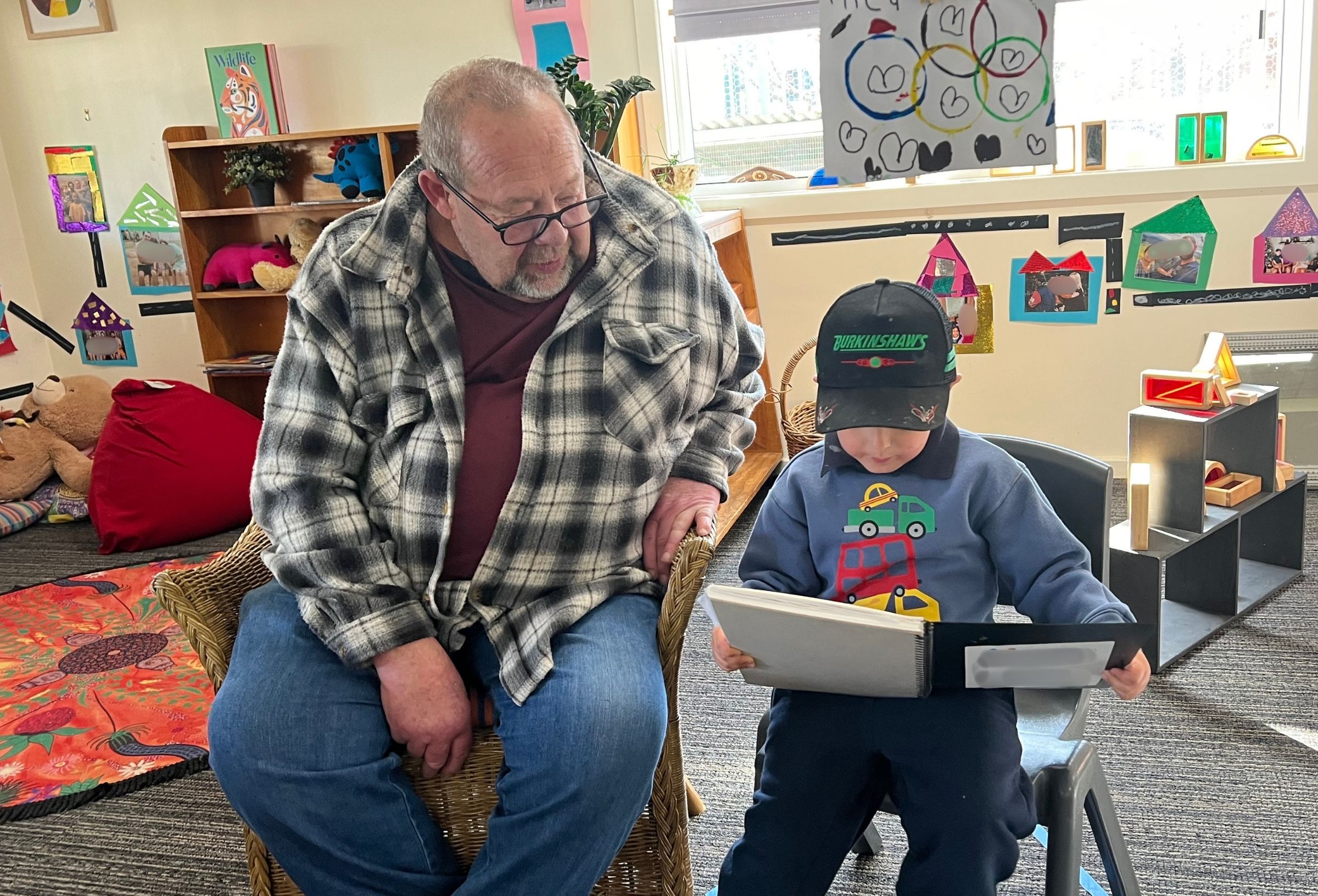
“Before, I wouldn’t have been able to, because I would’ve already been drunk before 12 o’clock,” he explains.
His relationship with Sandra has only become stronger, and the nightly arguments at eight o’clock are a thing of the past. But perhaps most significant, is how Rod now handles stress.
“If something goes wrong now, I generally don’t worry about it. I know I can fix it. And I know these things happen,” he says. “Before, I would’ve blown up - I would’ve thought to myself: ‘Jesus Christ, what have you done?’”
There was a moment that illustrated this shift perfectly. A good mate of Rod’s came over and they had a disagreement where the friend accused Rod of lying.
“We went back and forth,” Rod remembers. “It went on for five, ten minutes. But I used Fiona’s technique of deep breathing and I sort of called a halt to it. I said, ‘Come on, this is stupid.’ We shook hands and that was the end of it.”
Before? “I would’ve just said, ‘Piss off. Don’t come back. Get out of my life.’”
The friendship survived, the situation was resolved and Rod didn’t blow up his life over a disagreement.
Now Rod can go out and have two beers socially and stop. He’s in control of it, not the other way around.
“Before, I’d have one on the way and two at the place, and then if I had to drive seven minutes to the shop to get milk, I’d have one and take one with me,” he says. “Now I know if I’ve got to go somewhere and drive, that’s how it is and I don’t do it.”
What Rod wants others to know
When Rod talks to people considering getting help, his message is clear: don’t let fear hold you back.
“Don’t be frightened of it,” he says. “You’ve never been there, but you’ll find a different world there - more freedom, more things you can do, more motivation.”
His advice? Think about what you really want - to stop drinking completely, or to go back to social drinking where you can stop after a couple of drinks - and commit to it. Go to meetings every week if you can and be honest about the struggle.
“There’s nothing to be ashamed about,” Rod says firmly. “Once you admit to it, does it really matter what anyone else thinks about you? Once you get it out there, it’s off your chest. I think you’ll feel better.”
For Rod, the honesty wasn’t just about telling other people. It was about telling himself the truth.
And most of the time, that truth was met with support, encouragement and genuine care. A bottle shop worker who genuinely wanted him to succeed. A nurse who treated him with dignity. Wednesday meetings that felt like home. Friends who called to check in.
“It’s a bit like going into surgery,” Rod reflects. “It’s the fear of the unknown.”
But once you step into that unknown - once you look in the mirror and decide “today’s the day” - you find you’re not alone.
Fifty years is a long time. But it’s never too late to find that different world Rod talks about. The one with more freedom, more presence and more connection. The one where you don’t promise yourself “tomorrow” anymore, because you’re already living it today.
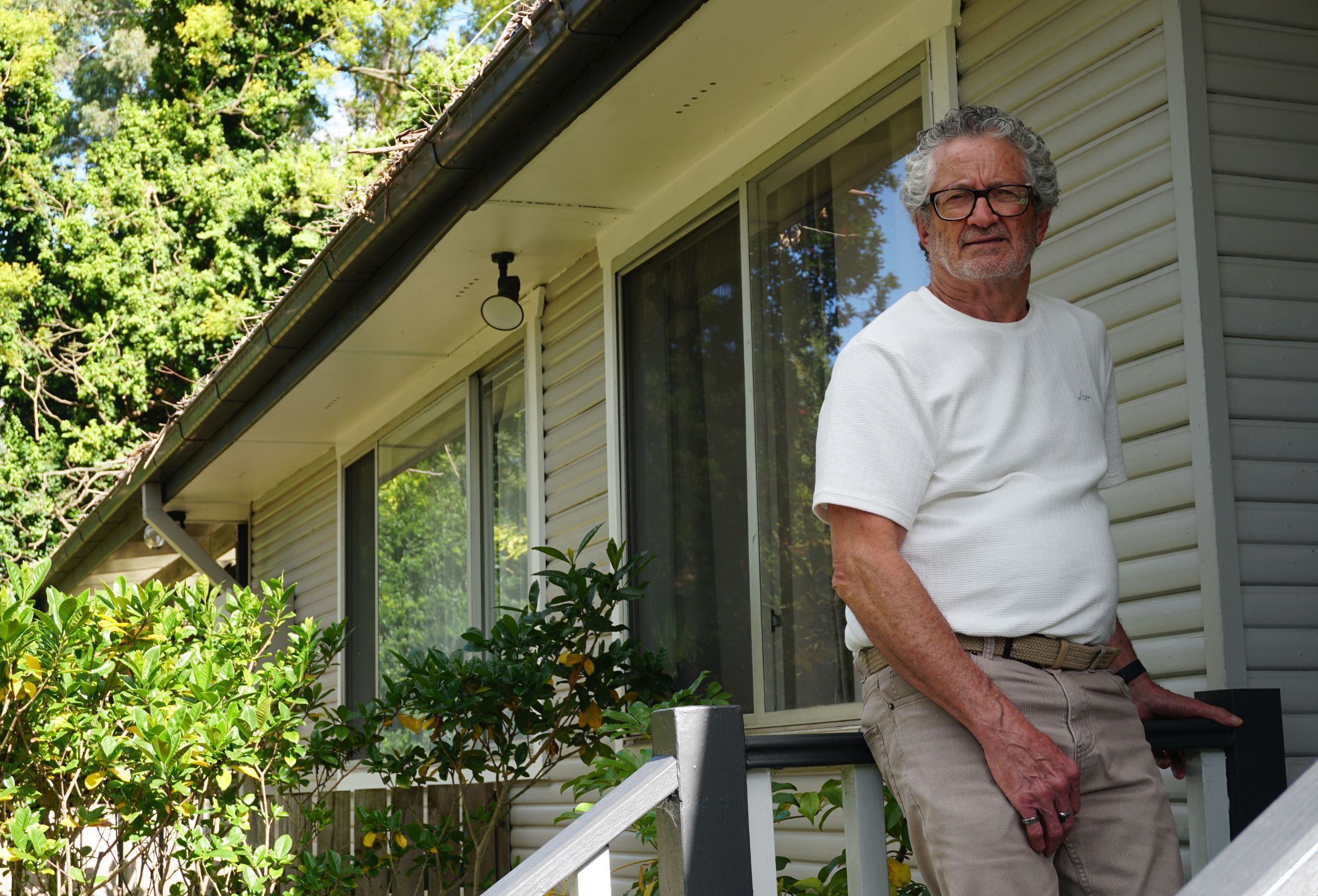
Wayne's Story
"It's all about me"
When Wayne is asked what advice he'd give to someone thinking about changing their relationship with alcohol, his answer is characteristically direct.
"It's all about me," he says without hesitation. "Don't worry about anyone else, as long as you're feeling good with yourself."
It's not the answer you might expect. There's no talk of doing it for loved ones, no promises about mending relationships, no gentle encouragement about small steps.
Just pure, unapologetic self-focus.
And for Wayne, now 14 months into his journey and fitter than he's been in decades, that philosophy is exactly what worked.
"Just reach out for yourself, that's all," he explains. "Be selfish for a change."
For someone who spent his whole life putting everyone else first, this shift in thinking wasn't just helpful - it was essential.
Decades of knowing, decades of not changing
Wayne's relationship with alcohol wasn't a secret, not even to himself.
"I always knew it was a problem," he says plainly. "But I always thought that I had the willpower to give it up."
And he'd proven he could - at least temporarily. Years earlier, he'd quit cold turkey for three months. No support, no medication, just sheer determination.
"I didn't find that difficult," he remembers.
But then he went back to it. Because when he stopped for those three months, nothing changed - his relationships stayed the same and his life looked the same, so why bother?
For decades, Wayne drank almost every night. If he didn't drink, it was an exception. He'd fall asleep while drinking - a pattern that caused tension at home but one he convinced himself wasn't that serious.
"Typically you don't think you're that bad," Wayne reflects.
He wasn't falling apart - he was functional, he maintained a level of fitness, work was fine and life carried on. Except the years kept passing and Wayne kept drinking.
"I wanted to be there for my grandchildren"
At 67, Wayne started thinking differently about time because he wanted to be there for his grandchildren. He wanted to actually be present, healthy and active.
"I wanted to get some health back," Wayne says. "I used to be really quite fit."
So that became his focus. Not fixing relationships. Not meeting anyone else's expectations. Just reclaiming what he'd lost - and making sure he'd be around to see what came next.
"I decided I was going to do this for me," he explains. "Forget everyone else, I was going to do it for me."
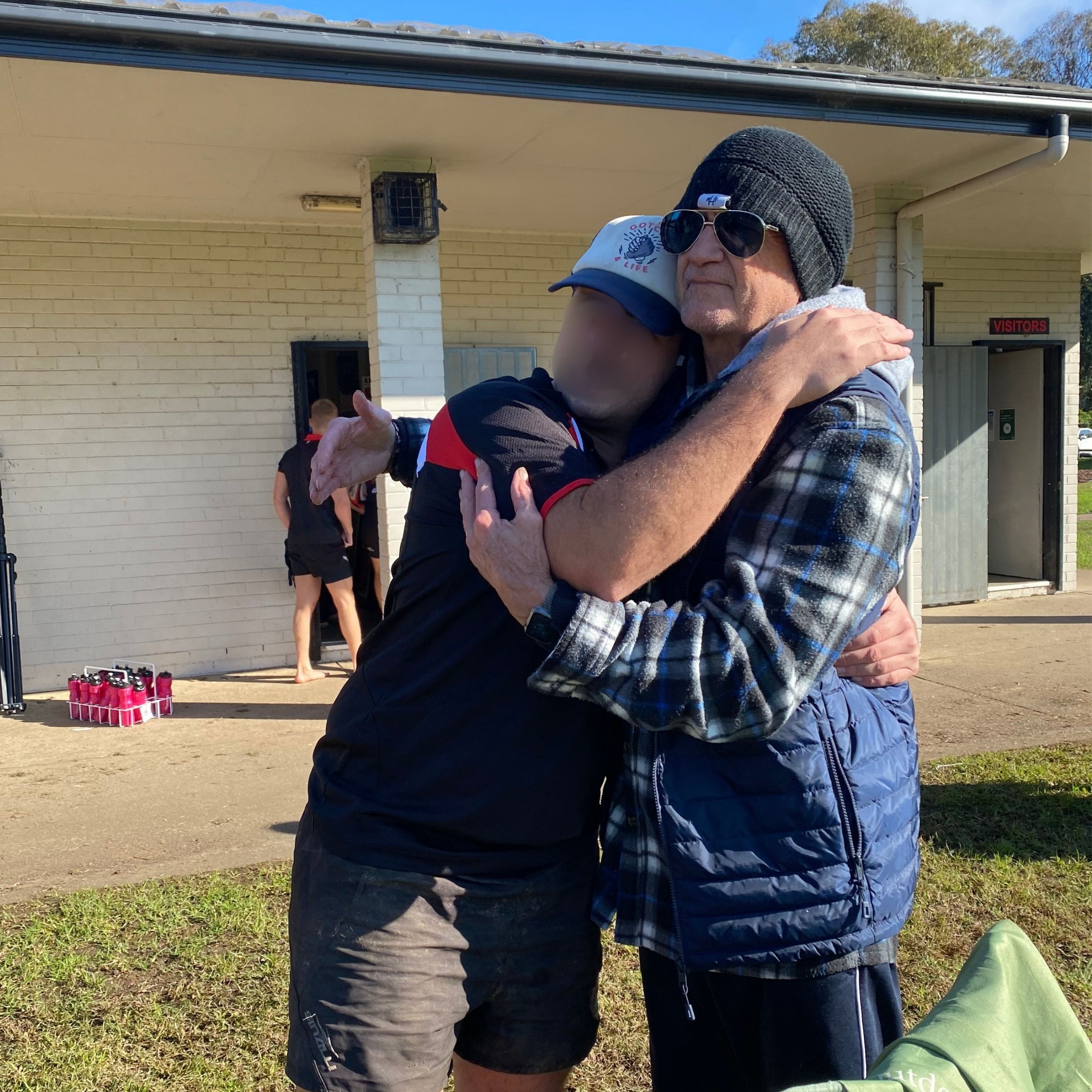
Finding the right support
Wayne found Clean Slate through a Google search. When he started talking to the team, he says it felt like a good fit - professional, positive, straightforward.
"But that didn't make much of a difference because I'm a positive person," he clarifies. "I knew that I could stand up to the challenge."
What did make a difference was that his health fund covered the program.
"That was a turning point, I think. Even though I now believe I've saved thousands of dollars in only 14 months, I would've paid for it anyway. But it helped."
From the very first session, his nurse Catherine had made a lasting impression.
"While you can sound empathetic to somebody's issues, you can tell by somebody's body language whether they're involved in your story," Wayne explains. "It wasn't just putting words to statements. I could feel that every time I spoke to Catherine, she was genuinely proud of what I was achieving."
"That was the biggest thing for me - for Catherine to be genuinely proud of what I'd done."
The challenge, not the hiding place
Wayne stopped drinking on October 16th, 2024, and he described his detox as surprisingly easy with the support of his Clean Slate nurse.
But Wayne's approach to his environment might surprise people.
He had always been surrounded by alcohol at family gatherings and social events - and rather than removing this temptation, he chose to keep it front and centre.
"I chose not to lock up my liquor cabinet," Wayne says. "I wanted to use it as a challenge."
There's a bottle of red wine - the kind he used to drink all the time - sitting on his bar right now, untouched for 14 months.
"It's just good to see it's there unopened," he reflects. "I just wonder if other people have seen it on my bar and thought, 'Oh, it's still there.'"
For Wayne, this approach worked. Previously, he would wake up in the middle of the night and take a small sip of alcohol - just enough to get back to sleep - and breaking that habit meant confronting it directly, instead of avoiding it.
But he's clear: this is what worked for him and it certainly won’t be for everyone.
The fitness religion
When Wayne talks about exercise, he doesn't call it a habit or a routine. "It's a religion," he says.
"I'm 68 years old and I'm in the gym for an hour every day, plus walking," Wayne says with unmistakable pride. "I want to live longer."
He can look back at his activity watch and count the days he's missed since the start of the year. There’s about five days - and a couple of those were because of a medical procedure.
Wayne isn't just fit for his age - he's reclaimed the fitness levels he had when he was younger.
"When I was in my twenties and thirties, I was pretty damn fit," he remembers. "And now I'm pretty damn fit again."
His health markers tell the same story, with a recent blood test coming back entirely clear..
And the money he's saved in that time? It amounts to thousands of dollars that used to disappear into bottles and late-night drinking.
Wayne jokingly reflects on becoming more direct, saying "I tend to say what I think instead of keeping it in. I just get annoyed with people. I don't know if that's a result of no longer drinking."
Maybe it's seeing things through a clearer lens, or maybe it's having less tolerance for things that don't matter - either way, it's different in the best way.
Watching from the other side
One of the strangest parts of Wayne's journey has been watching other people drink.
He's surrounded by drinkers, from family gatherings to social events and celebrations - drinking has always been part of the culture.
"Now I look at them and think, 'Oh God, I hope I wasn't like that,'" he says.
It's given Wayne perspective on what he used to be like - the falling asleep, the loss of control, the nights that blurred together. Things that he minimised when he was in it.
"Being in a family of drinkers and putting yourself in that environment - that can really test you," he admits. "But I found it a lot simpler than I thought I would."
His advice? Focus on yourself. Not on changing others, not on avoiding situations, just on your own path forward.
The stage of life that mattered
Wayne is clear about one thing: he couldn't have done this 30 years ago.
"I mean, I played sport and drinking is part of the culture. I always played sport. But now I'm older and wiser and I want to live longer. I took the bull by the horns."
Being 68 changed the equation. The prospect of grandchildren changed it. Wanting to reclaim his health before it was too late - that changed it.
This isn't a story about hitting rock bottom or dramatic consequences forcing change. It's about reaching a point in life where the motivation became crystal clear.
Fourteen months in, Wayne is thriving. He's fitter than he's been in decades, his health is excellent, his focus is sharp, and he's saved more money than he could have expected.
And he's doing it all for himself.
"I've never been like that," Wayne admits. "I've always put everybody in my life first. And now I'm starting to say what I think and put myself first."
His advice for anyone thinking about making a change is the same advice that worked for him:
"Just reach out for yourself. Be selfish for a change. As long as you're feeling good about yourself, that's what matters."
It's direct. It's unapologetic. And for Wayne, it's exactly what made the difference.
At 68, he's not just surviving - he's reclaiming everything he thought he'd lost. And he's doing it entirely on his own terms.
Breaking Down Barriers: How Clean Slate Clinic is Reimagining Alcohol Support. An interview with YO1 Radio.
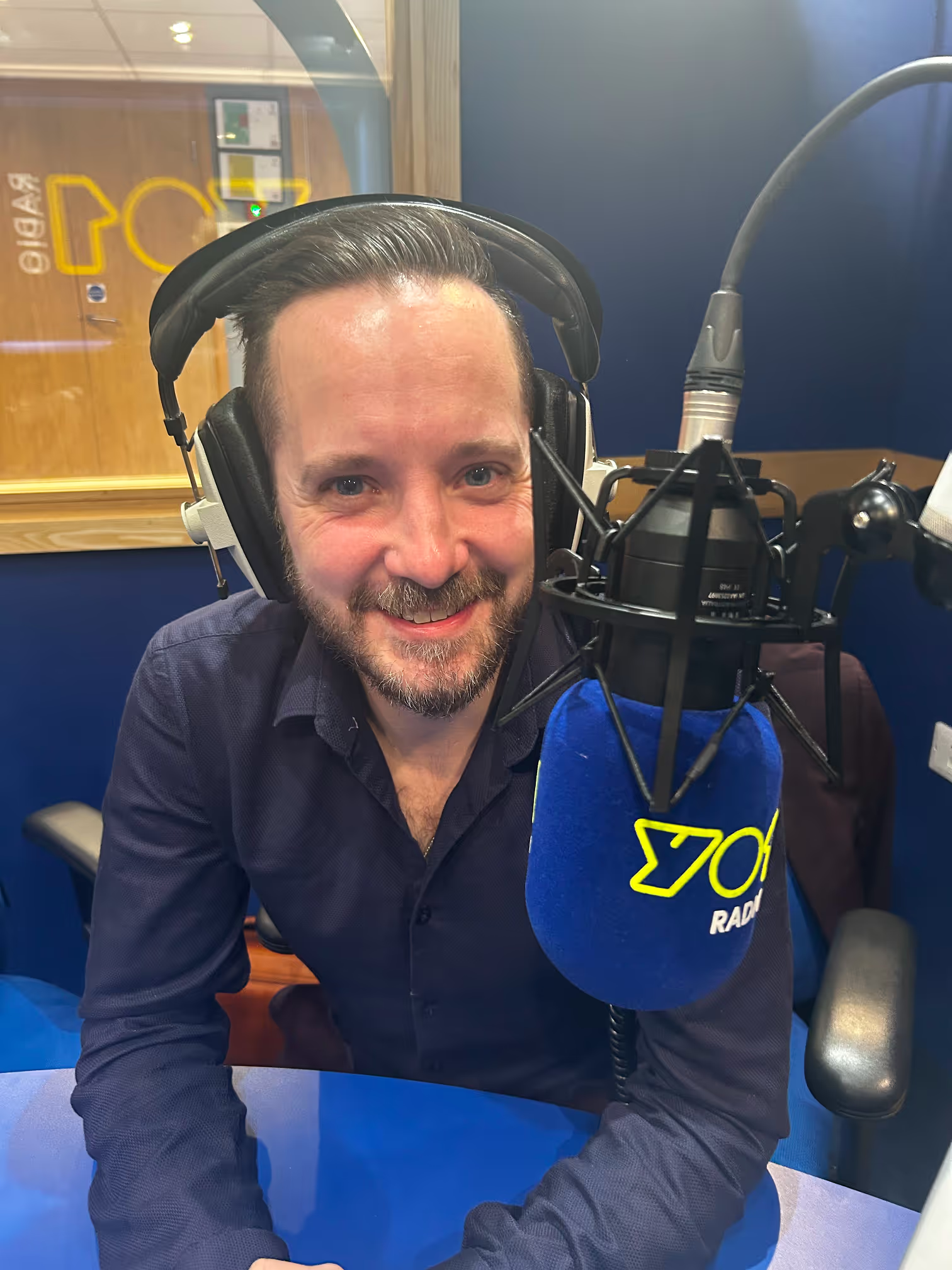
Breaking Down Barriers: How Clean Slate Clinic is Reimagining Alcohol Support
In a recent Y01 Radio podcast, Dr. Aaron Brown, Managing Director of Clean Slate Clinic, spoke openly about why the traditional route to alcohol support is failing too many people. Between overstretched NHS services, a postcode lottery in local authority provision, and the stigma that stops people asking for help, Clean Slate was built to do things differently; a fully remote, flexible service designed to fit around real life. Aaron discusses the goal achievement rate at Clean Slate with 84% of clients meeting their alcohol goals post detox, and the reasons why it's a successful approach.
Aaron also spoke passionately about dismantling the damaging myth that alcohol dependency is a moral failing or a lack of willpower. It's a compelling, honest, and at times moving conversation. Well worth a listen.
Listen to the full podcast here

The changing face of alcohol dependence in Australia
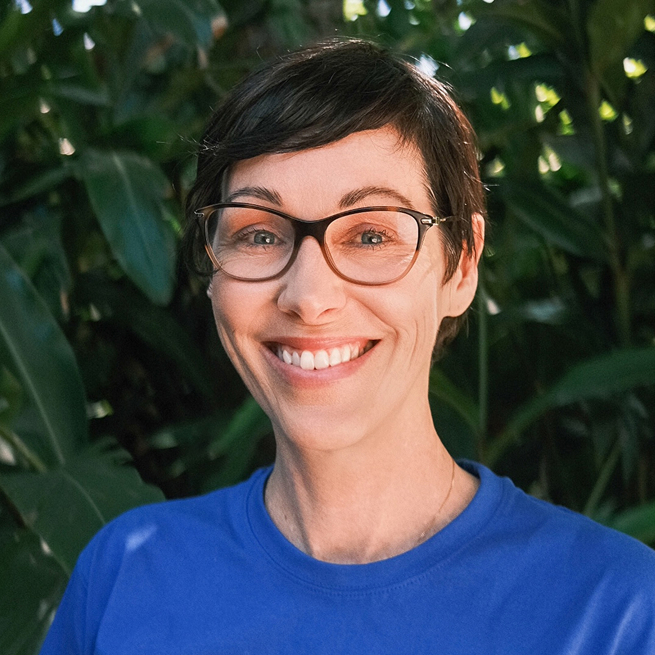
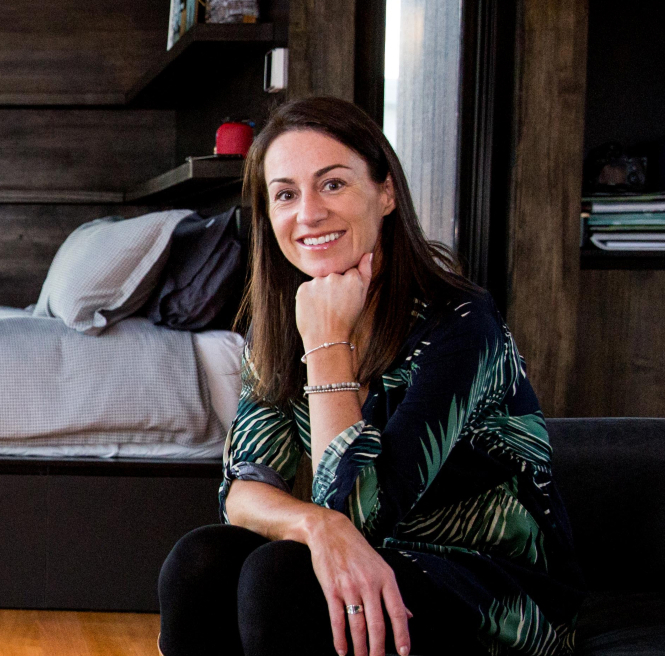
The stereotype of who struggles with alcohol dependence is shifting. According to a recent survey by Alcoholics Anonymous, the typical member in Australia today is a woman over 50, university educated and in employment. Female members outnumbered men for the first time in 2025. Clean Slate Clinic's senior clinician, Fiona Faulkner, points to a generation of women who came of age in changing workplaces, often drinking to fit in, while also navigating the physical and hormonal shifts of menopause. What felt manageable for years can quietly become dependence.
Alice Hansen's experience captures this pattern. A Tasmanian with a tennis scholarship, a degree and a career in tourism, she first entered rehabilitation in 2008 and returned to the same ward 26 times. She credits continuity of doctor-led telehealth care following detox with breaking the cycle. She is now sober, runs marathons, is learning to sail, and leads wellness retreats in Tasmania.
Around 40,000 Australians present to emergency departments for alcohol withdrawal every year, with 70 per cent relapsing within 30 to 90 days of detox. The system manages the acute episode, then discharges people back into the same circumstances that led to their admission. As Fiona explains, this is not a personal failure but a systems failure, one that removes support at exactly the moment people are most vulnerable.
Clean Slate Clinic has proposed a National Hospital Avoidance Program to close this gap, offering 90 days of structured post-detox support at an average cost of $3,700 per patient, compared to $12,000 to $20,000 in repeat acute care. It is a fixable problem, and the evidence shows that continuity of care changes lives.
Read the full story in the Canberra Times
.jpg)
How to Choose the Right Alcohol Support
Have you thought that you would benefit from support with your drinking? Are you not sure where to start looking for that help?
Reaching out for support can feel scary, especially if you're not sure how to do it. As a GP who spends most of my time in the recovery community, I spend a lot of time helping people navigate the various support options available and it can be overwhelming.
This guide aims to help you navigate the systems and options and how to see if they're right for you.
We built Clean Slate Clinic with the mission to smash down barriers to accessing support and making the process simpler and a programme that is realistic for people to get support alongside their normal day-to-day lives.
What are the options?
Navigating the alcohol services across the UK can feel difficult as there are just so many different systems and pathways which can vary depending on where you live.
Many people ask 'Who do I call? My GP? NHS? Charities? Mental Health Services? Groups like AA? How do I find the best option/options for me?'
This guide is designed to support you through these questions and explain what is available for you, how you can access it and why it can feel difficult or daunting.
We'll guide you on what to look for in any provider so you can make a decision you feel confident about.
The web of support
This is a general overview of the main categories of alcohol support you may encounter:
Conventional services
These are the local Drug & Alcohol service in your area which is provided by the Local Authority (e.g. the Council) but may have some crossover with the NHS.
Everyone in the UK has a right to access free-at-the-point-of-care support through these services.
Mental Health Services
People can access their local IAPT service which is a free NHS talking therapies for help with common mental health issues such as anxiety and depression. It is very common for alcohol use and depression/anxiety to co-exist.
However, many mental health specialists advise treating the alcohol issue first as that has a better chance of improving symptoms than talking therapies alone.
Charities
There are a number of national and local charities that provide support.
Recovery Community
These are usually local hubs or collections of organisations that support people directly in their community.
Another term here may be Lived Experience Recovery Organisations which are run by people who have been through addiction and use their recovery experience to help those in need.
Peer-Support Groups
These are made up of people who have lived experience, including SMART Recovery and 12-step groups like AA.
Private Services
There are many private options including private counsellors, coaching services as well as detox services and inpatient rehabs.
Apps
There's a variety of self-help/motivational apps out there that can support people dealing with particular issues, mental health or behavioural change.
Safety first: If you currently drink daily, or have experienced shakes, sweats, seizures, hallucinations, or confusion when you've tried to cut down, please do not stop or reduce suddenly without medical guidance. Alcohol withdrawal can be medically serious. Speak to your GP or call 111 for urgent advice. In an emergency, call 999.
Find what works for you
Like most things in life, there is not one single solution for everyone. Alcohol dependence is a complex interplay of biology, psychology, social and environmental conditioning alongside habit.
It's a personal journey and what helps one person may not suit another and that's OK.
That does not mean one service is 'better' or 'worse' than another; the best option for someone is one that works for them.
Research consistently shows that the strength of the match between an individual and their treatment approach is one of the strongest predictors of success.
A programme that allows you to feel connected, fits your circumstances and addresses your concerns and goals is far more likely to lead to lasting change than one chosen under pressure or without enough information.
So take your time, keep an open mind and look at a variety of options to see what seems like the best fit.
What to look for in any provider
Whether you're considering NHS services, a private programme, or a combination of different types of support, these four criteria apply across the board:
Registered and regulated in the provider's own name
Any service offering medical detox or clinical treatment in the UK must be registered if they carry out regulated services (e.g. medical or social care) with the following:
England
The Care Quality Commission (cqc.org.uk)
Scotland
Health Improvement Scotland
(healthcareimprovementscotland.org)
Wales
Healthcare Inspectorate Wales (hiw.org.uk)
Northern Ireland
The Regulation and Quality Improvement Authority RQIA (rqia.org.uk)
For England, you can verify this at cqc.org.uk/care-services. Be cautious of providers that claim clinical oversight through a third-party arrangement rather than being directly regulated themselves. This is an important detail to research.
Structured aftercare following detox
Detox addresses the physical dependence on alcohol. Without structured clinical support afterwards, relapse rates are high.
NICE clinical guideline CG115 recommends that detox should always be followed by ongoing psychosocial intervention.
A credible provider will include aftercare as a core part of the programme, not as an optional add-on.
Independently verified outcomes
It is reasonable to ask any provider for their outcome data. Results that have been evaluated by a reputable academic or research organisation carry more weight than self-reported marketing claims.
A personalised clinical approach
Be wary of rigid, one-size-fits-all protocols. The best providers will conduct a thorough assessment before recommending a treatment plan; this should include a review of your circumstances, drinking history, physical and mental health, home and social environment, and your goals.
Why Clean Slate Clinic exists
We built Clean Slate Clinic because we recognised the gap in the above services where people can fall between the cracks and not have access to the most suitable care for their situations.
For many people experiencing alcohol dependence the existing options present a difficult choice, particularly those managing careers, families and day-to-day responsibilities.
NHS community alcohol services provide valuable support, but can suffer from under-resources and high demand which can lead to longer waiting times and limited intensity and duration of available treatment.
Residential rehabs can offer immersive care, but it requires stepping away from your life for weeks, which is not feasible or desirable for everyone.
The treatment duration is focussed on detox and the aftercare follow-up can be on the shorter side.
Detox-only services address physical withdrawal but the guidelines and research is clear that detox-only (without aftercare with psychosocial interventions) is not an effective treatment for alcohol dependence in the longer term.
Clean Slate was designed to give people another choice and sits between the conventional/NHS services and the very expensive residential rehabs.
Our model is clinically rigorous, medically supervised and structured for the long term, whilst being delivered in your own home, so that recovery happens in the environment where real life happens.
%20-%20Rebekah%20Martin-2.avif)
Here is what that looks like in practice
Doctor-led and CQC-registered
Clean Slate Clinic is registered directly with the Care Quality Commission (ID: 1-22152371205). Our clinical pathways are designed and overseen by addiction-specialist doctors and delivered by qualified clinicians.
This is not a wellness programme with a medical veneer, it is a regulated clinical service, held to the same regulatory standards as hospitals and the NHS.
A 12-month programme, not a quick detox
Detox is a medical event of stopping alcohol. Recovery is a learning process.
Our programme spans three phases over 12 months: 1) assessment/preparation, 2) medically supervised withdrawal with daily clinical reviews and structured reviews, 3) recovery and maintenance phase with ongoing clinician appointments and access to SMART Recovery meetings. This reflects the evidence that lasting change requires sustained support.
Home-based by design
Behaviour change research shows that new coping strategies are most effective when they are learned in the environment where they will be used.
Removing someone from their daily life can create a false sense of confidence that collapses on return.
Our model is built around the opposite principle: supported change in real-world conditions.
Independently verified outcomes
Our treatment outcomes are evaluated by independent academic researchers and not self-reported.
We believe that if a provider cannot show you verified data on how their clients do, that is worth noting.
A social enterprise, not a volume business
Clean Slate Clinic is a certified social enterprise (Social Enterprise UK, No. 17863). Our purpose is to make evidence-based addiction treatment more accessible.
We exist to deliver good clinical outcomes, not to maximise patient throughput.
Suitability matters to us
We do not accept every referral. Our onboarding process includes a clinical suitability assessment and we will tell you directly if we believe another type of service would better meet your needs. The guide below exists because we mean that.
Who Clean Slate works well for
Our programme tends to be the best fit for people who are drinking at dependent levels, want to make a significant change, but need to continue managing their work, family and daily responsibilities during treatment.
Many of our clients are professionals who have been functioning outwardly while struggling privately; people who need a programme that takes both the clinical and the practical realities of their situation seriously.
If that describes your situation, you can take our confidential suitability assessment or book a call with the team to find out more.
Your wider options in the UK

Clean Slate is one option among several and the right choice depends on your personal circumstances. Below is an overview of what else is available:
Your GP
Your GP is your advocate for navigating the healthcare service. They are a great resource for continuity of care and liaising between any specialist teams caring for you.
If you have general concerns about your mental health then they can be a good resource too.
As Drug & Alcohol Support is usually provided by the Local Authority (council) as opposed to the NHS then your GP often just signposts you to contact the services directly (they don't usually need to refer you and you can contact them directly).
Your GP cannot usually prescribe specialist medications to help with alcohol dependence. If speaking to your usual GP feels uncomfortable, you can request a different doctor at the same practice or book a telephone appointment.
NHS / Local Authority community alcohol services
Every area in England has NHS-commissioned drug and alcohol services and most accept self-referrals. These typically offer assessment, key work sessions, group therapy and in some cases, medically supervised detox.
You can find your nearest service using theNHS alcohol support service finder (nhs.uk/service-search/other-services/Alcohol-addiction-support) or by searching via FRANK at talktofrank.com.
These services are free and confidential. The trade-off is that waiting times and treatment intensity vary by area and the level of ongoing support may be less structured than a private programme.
Private residential rehabilitation
Residential rehab provides an immersive, structured environment away from daily life. Stays typically range from 28 days upwards and costs vary significantly from around £6,000 for a four-week programme to considerably more for specialist or luxury facilities.
Before committing, check CQC registration, ask about aftercare provision and review their most recent CQC inspection report at cqc.org.uk/care-services.
Residential treatment can be the right choice for people who need a period of complete separation from their environment, or whose home circumstances are not safe for a home-based approach.
It is generally not necessary for everyone and the evidence on long-term outcomes is mixed unless robust aftercare is included.
Peer support groups
Peer support provides something clinical treatment often cannot: the experience of being genuinely understood by someone who has been where you are.
12-Step / 'Fellowship' Meetings (e.g. Alcoholics Anonymous)
Meetings across the UK, in person and online. The helpline number is 0800 917 7650. More at alcoholics-anonymous.org.uk.
SMART Recovery UK
Evidence-based mutual aid using cognitive behavioural tools. Meetings available online and locally. More at smartrecovery.org.uk.
Both are free, require no referral and you can attend to listen before deciding.
Counselling, therapy and recovery coaching
One-to-one support can be valuable at any stage. The BACP therapist directory at bacp.co.uk/search/Therapists lets you search for accredited counsellors by specialism, including alcohol and addiction.
Trauma-informed approaches such as EMDR or trauma-focused CBT can be particularly relevant for people whose drinking is connected to past experiences.
Recovery coaching is a distinct discipline from clinical therapy. Coaches work alongside you to build practical, social, and personal resources that sustain long-term change.
Our partner, J2 ARMS, offers personalised recovery coaching pathways designed to support individuals before, during, and after clinical treatment. More at j2arms.com.
Helplines and information services
If you're not ready to commit to a programme but want to talk through your situation, these services are free and confidential:
Drinkline
0300 123 1110. Free national alcohol helpline. Weekdays 9am–8pm, weekends 11am–4pm.
Drinkaware
Independent information, self-assessment tools, and a service finder at drinkaware.co.uk.
Alcohol Change UK
Guides, research, and tools including the Try Dry app. More at alcoholchange.org.uk.
With You
Free drug and alcohol support across England and Scotland at wearewithyou.org.uk.
For people in Scotland, Wales, and Northern Ireland
Scotland
Contact your local Alcohol and Drug Partnership, or call Drinkline Scotland on 0800 7314314.
Wales
DAN 24/7 is a free, bilingual helpline available 24 hours on 0808 808 2234.
Northern Ireland
Lifeline helpline on 0808 808 8000, or search via the Public Health Agency.
Support for family and friends
Adfam is a UK charity that supports families and friends of people affected by alcohol or drug use. They provide confidential helplines, online resources, practitioner training and a searchable directory of local support groups specifically for relatives and carers. For more info visit adfam.org.uk or call 07442 137421 (note this is not a helpline but an enquiry line).
Al-Anon (al-anonuk.org.uk) offers meetings and a helpline for families and friends. Nacoa (nacoa.org.uk) provides a free helpline for children and young people affected by a parent's drinking.
Making a decision
There is no perfect moment to start and there is no single correct path. What matters most is that whatever you choose addresses your personal situation and drivers towards alcohol and supports you through stopping drinking and then extends beyond to work on long-term change.
If you are comparing providers, use the criteria in this guide to ask informed questions. A good provider will welcome that scrutiny.
A few things worth remembering
Ambivalence is normal; most people who change their relationship with alcohol did not feel "ready" when they started. Readiness often comes after the first step, not before it. You do not have to do this journey alone.
Reach out
Support is always available.If you'd like to explore whether our programme at Clean Slate Clinic is right for you, or simply want to talk through your situation and learn more about us then you can book a call with us.
There is no obligation, no pressure, we just want to support you whether that is with our programme, or helping you find another service that works for you.
Michelle's Story
"What's wrong with mummy?"
Michelle had always been the life of the party. A binge drinker, sure, but not someone who drank every day. Not someone with a "real problem." At least, that's what she told herself - right up until the night her daughter asked a question she couldn't ignore.
Michelle had just arrived home from a beer festival - but the problem was, she couldn’t remember how she got there.
She knows her friends brought her back - they must have, because she woke up in her own house. She'd arranged for someone to watch the kids, and she'd thought they'd be asleep by the time she arrived.
But they weren't.
Her daughter was old enough to ask questions. Old enough to remember when her father had struggled with his drinking, whose relationship with Michelle had ended years earlier. Old enough to see what was happening now and connect it to what had happened then.
"What's wrong with mummy?" she asked.
Soon after, the babysitter had to leave. Michelle was alone with her children, still intoxicated and still barely functional. "Who knows what could have happened," she says now, her voice quiet.
"You think about these things after the fact, and it's pretty shocking."
That moment of her daughter's question cutting through the fog, the memories it dragged up, the realisation of what could have gone wrong - that was the wake-up call she couldn't ignore anymore.
I wasn't a stereotypical 'alcoholic'
Here's the thing Michelle wants you to understand: she never thought she had a real problem.
She'd been drinking since before she was old enough to legally buy alcohol - always the life of the party, always fun and always up for it. A binge drinker, sure, but not a daily drinker. And that distinction mattered to her.
"I wasn't a stereotypical 'alcoholic,'" she explains.
"They call it grey area drinking. I wasn't drinking every day. I wasn't waking up and drinking first thing in the morning."
Michelle knows now that it’s easy to hide in that grey area. Easy to convince yourself you're fine because you can always point to someone worse and say, "At least I'm not that bad."
For years, Michelle stayed fairly stable with her drinking - but then loneliness crept in, life working from home got isolating and the stress built up. And her drinking, which had always been there in the background, started taking up more space in her life.
She told herself it helped. Stressful job, stressful single parenting - all the reasons you think a few drinks will take the edge off. "But it doesn't actually help," Michelle says now. "It just doesn't."
Still, she thought she needed it. More than that, she thought she enjoyed it. The idea of giving it up felt impossible, unnecessary even. She wasn't that bad.
Except the warning signs kept piling up.
The blackouts started adding up
First, there was the polo event.
One of those big day-drinking affairs where everyone's having a good time, the sun's out, the drinks are flowing. Michelle was there with all her friends, laughing and socialising, feeling fine.
Until somehow, they lost her.
She doesn't know what happened. Massive blackout. The next thing she remembers is being alone, trying to figure out how to get home. When she checked her wallet later, she found a card from a safety volunteer who'd helped her find her way.
"Pretty horrible," she remembers. "The anxiety the next day, the regrets, beating yourself up over it." Her mental health wasn't great to begin with, and these incidents weren't helping.
There were other nights where she didn't know how she got home. Little injuries she couldn't explain - nothing massive, but enough to make her wonder. Situations that, looking back, weren't safe. The kind of things you brush off in the moment but that stick with you later, nagging at the edges of your mind.
And then there was the beer festival - another day-drinking event with friends. Another afternoon that should have been fun.
She arrived home with no memory of the trip. Her daughter saw her in that state. Asked that question. And suddenly, Michelle couldn't brush it off anymore.
"That was probably what led up to me seriously thinking that something needed to change," she says.
The four month break
Not long after that night, Michelle was scheduled to have a planned surgical procedure. Her medical team outlined one key requirement: no alcohol. Her liver needed to shrink before surgery, and she couldn't drink during recovery either.
So she stopped - for four whole months.
"I did okay because it was a medical requirement," Michelle explains. When there's a rule, a reason, a deadline - she could stick to it. Four months alcohol-free. No problem.
She had the surgery, she recovered and life moved forward. But once the medical necessity had lifted, the drinking slowly crept back in.
Except this time it looked different. She wasn't going out to parties or festivals anymore. She was drinking alone at home, and working from home made that dangerously easy.
She'd try to set limits for herself, like only buying a six-pack, but then it was so simple to just order more and have it delivered to her door. "So that didn't always work," she says. "And then the weekends were a free-for-all."
But it wasn't just affecting her anymore.
"It wasn't a life for the kids. I wasn't there for them."
That realisation sat heavy in her chest. The pattern she'd sworn she'd never repeat was repeating itself right in front of her children's eyes.
Taking the first step
Michelle remembers seeing an ad for Clean Slate pop up on her Facebook feed. At first, she scrolled past, but then she saw it again. She clicked through, did some research, read what people were saying about it, and saw that her health fund covered the program.
But what Michelle liked the most, was that it didn't feel like “going to rehab”. There wasn't that stigma, that sense of "this is for people whose lives have completely fallen apart."
"It was actually easier to go ahead with it," Michelle explains. "I was still at home. I didn't have to find alternative care for my kids. Everything was done via telehealth, appointments were easy to book - and honestly? That convenience mattered."
The convenience wasn't just practical. It was psychological.
"There was less chance of backing out because it was so easy. And I could just be in my own home, in my own bed."
You have to do the work
Michelle figured out early that stopping drinking was only the first step.
"You have to do the work," she says, "otherwise nothing's going to change. I realised that pretty early in the piece."
Once Michelle had gone through her supported detox, the regular appointments with her nurse provided accountability. "It was good to have someone to be accountable to and to check in on how things are going and talk through any issues that have come up," she explains.
Then there were the group meetings which provided a sense of connection and community. Michelle explains, "it was great to connect with people that were going through the same process and having similar mindsets around alcohol - because other people don't always understand."
They also became a safe space to figure out how to live her life without alcohol as a crutch, because stressful things still happen, and difficult emotions still come up.
"I had a friendship breakdown after I gave up," Michelle shares. "Things like that - you don't always know how to navigate them. But you can talk through them in these meetings with other people who may have had the same situations. It's a safe environment."
What struck Michelle was how the telehealth format let her work through real challenges in real-time. She wasn't removed from her daily stressors - she was learning to handle them without alcohol.
But she's clear about this: none of it works unless you actually do it.
What's different now
When Michelle talks about what's changed since she stopped drinking, she doesn't speak in vague terms.
"You don't realise how much you spend on drinking."
All that money that used to disappear into bottles and deliveries she barely remembered ordering - it started accumulating instead. Becoming something she could actually use.
Her physical health improved, and she even quit smoking three and a half months into her journey.
And that confidence showed up at work too with Michelle negotiating a higher-paying job, something she's not sure she would have had the courage to do before. "I'm doing a lot better in my work now," she says.
But it's the bigger life shifts that really illustrate how much has changed.
Michelle bought her first house.
Something that felt completely out of reach when she was spending money on alcohol, when her focus was scattered and her confidence was low.
"I mean, it didn't all happen just because I quit drinking," Michelle is quick to clarify, because she knows how it sounds, how it might seem too good to be true. "But it culminated. And giving up alcohol definitely helped in that regard."

And then there's the shift that matters more than any house, job or amount of money saved: she's now present with her kids. Actually there, not just physically in the room but mentally and emotionally available.
"I'm more present with my kids. They're happier," Michelle says, and you can hear how much that means to her. "I'm looking after their health now, too."
Nine months into her journey, Michelle is clear about her intentions: "I'm 9 months alcohol-free now and don't intend on going back - because I don't need it."
What's the worst that could happen?
When Michelle is asked what she would say to someone who’s worried about a life without alcohol, her answer is characteristically direct:
"What's the worst that's going to happen? You get healthy, you save money. There's no downside I can see."
Before she quit, she thought she needed alcohol. Believed it was helping her cope with the stress of single parenting, the pressure of work, the loneliness - all of it. Those were the stories she told herself - that alcohol was a reward, a stress reliever, something she enjoyed that helped take the edge off.
"But it doesn't actually help," she says now.
It took those wake-up calls to make her see that her relationship with alcohol wasn't what she'd convinced herself it was. But here's the message Michelle wishes someone had told her years ago:
"You don't have to be the atypical or stereotypical ‘alcoholic’. I knew I had an issue with my relationship with alcohol, but I wasn't the stereotypical ‘alcoholic’." She pauses, making sure the words land. "Grey area drinking - I wasn't drinking every day, I wasn't waking up and drinking first thing. Doesn't mean you can't get help with the impacts alcohol might be having on your life."
"You don't have to hit rock bottom. I had a few rock bottoms along the way, and they definitely give you wake-up calls. But let's not go all the way to the bottom."
You don't have to lose everything to deserve help. You don't have to fit a narrow definition of "bad enough" either. If alcohol is impacting your life, your relationships, your parenting, your health, your sense of self - that's enough.
Lisa's Story
When normal life feels extraordinary
Lisa now walks to the beach every morning from her new place. It's less than five minutes away - the prettiest beach in town, she says. There's a nature reserve nearby. Her mum is there with her. Everything just... works.
"Everything I touch turns to gold," she told her nurse recently. She had to stop and think about that.
"At first I thought - I'm so lucky," Lisa says. "But I don't know if it's all luck. Now, when I look at the good things happening to me - it's normal. Good things can happen. It's just that because I was drinking, because my life was always chaotic or boring or blending into one... that was my normal."
Six months ago, Lisa's normal was very different.
When wine o'clock kept creeping earlier
By her mid-fifties, Lisa had what she now recognises as a high-functioning alcohol dependence - though she was in denial about it at the time.
She'd wake up in the morning saying, "This is it. This is the last day." She was still working full-time, still caring for her mum, still functioning. But life was becoming increasingly isolated and overwhelming.
"Now that I look back, it was probably the alcohol that was becoming overwhelming," Lisa says, "Or the alcohol consumption was making everything else overwhelming."
She was a home drinker and recalls having glasses of wine scattered around the house - in the bathroom, the bedroom, and anywhere else that had slipped her mind. If it was raining on the weekend, she'd look at the weather and think: That's the go-ahead for me to stay home and drink today.
"That justified my actions at that point in time", she explains.
In the meantime, wine o'clock was creeping earlier and earlier. Five o'clock became two o'clock, and then she'd be in bed by eight because she’d drunk too much. Then she’d wake up and do it all again.
"I was sick of waking up feeling sick," Lisa says. "I was sick of just trudging through days, waiting till five o'clock came so I could drink."
She also knew that her drinking was affecting her health, having received poor liver function results years ago. Lisa explains, "I was starting to get really lazy. My weight was fine, but I wasn't exercising. I was just... plodding through life."
The long shadow
Over a decade before, Lisa experienced a series of traumatic events. What followed were years of being in survival mode - hypervigilance, fear, and alcohol as the only thing that made her feel strong enough to keep going.
"At first I was using it to numb my emotions," Lisa says. "It felt good when I was drunk - like I could handle anything."
She was drinking till two in the morning, then getting up and going to work at four, running on adrenaline and alcohol.
She was jumping at everything, even running red lights out of fear.
"In the scheme of everything else going on, the drinking was under-appreciated," she explains. "Which I'm not blaming anyone for. And I don't blame myself either. But that was my turning point."
For many years, she carried that weight, and it would take time before she was ready to put it down.
Lisa had tried to quit drinking twice before in her thirties, doing seven-day inpatient detox programs.
"It felt like a bit of a holiday," she says. "Seven days with no alcohol, some exercise. I got a little bit out of it. But as soon as I got out, I went straight back to drinking." Lisa explains, "I was a home drinker, and my alcohol consumption had become so much of a habit, I needed to break that habit in the place where I was doing it."
The night everything changed
One night, after a few too many scotches, Lisa sat down at her computer. She'd been thinking a lot about what was going to happen to her, and she knew that she didn’t like the way her life was progressing.
"I just was sick of it," she says. "I was just ready."
She Googled something about alcohol support and Clean Slate Clinic came up. At-home detox. She read it and thought: That is me. That’s exactly what I need.
She completed the suitability test and booked a call for 8:45am the next day.
"I thought, 'Yeah, this call sounds good,'" Lisa remembers. "Then I woke up thinking, 'Crap, what have I done?’"
But that immediate follow-up call changed everything.
"It didn't give me that second chance to back out," she says. "And it certainly opened my eyes up when I was sober."
After speaking with Andrew, a lived experience member of the Clean Slate team, Lisa finally felt like someone understood what she was going through - and she realised that she was ready to make a change.
"I'm more scared about what life will be like without it"
Lisa told her family and friends about starting the program, feeling excited (and terrified).
"Everyone was overwhelmingly supportive," she says. "They kept asking, 'Are you scared?' And I said, 'Yeah, I am scared. I'm more scared about what life's gonna be like without it than actually doing the detox.'"
She visited her daughter before starting the detox, planning to go out with a bang. But something had already shifted.
"I hardly drank anything. But when I did, I was really quiet and I was present," Lisa says. "My daughter just said, 'Wow.' Even when she offered me wine at two o'clock on the weekend, I'd say, 'You know what? I don't even feel like one.' I was already working on it - it was just coming naturally for me."
When she got home, she started the preparation phase of the program. And within two weeks, she’d had an epiphany and decided to retire and move interstate.
"There were really, really good barriers," Lisa says. "But I looked at my life and thought: the ducks need help lining up. You have to pull them. You can't just wait."
Going from strength to strength
Lisa then went through her detox at home while packing up her entire life.
On day one, she put her Fitbit back on and started exercising again - something she hadn't done in years. She set goals every night for the next day. She dealt with the stress of relocating. And she just managed it.
"I just took control," Lisa says. "I just did it."
She now plays simple games with her mum every night, like Scrabble, and they laugh until they cry. "We haven't laughed so much in years," Lisa says.
Sometimes when they're doing something together, Lisa tells her mum: "You know what? I wouldn't have been able to do this if I was drinking."
.jpg)
Lisa takes a moment to reflect, sharing, "Life was just too hard before; it had one massive, day-in, day-out barrier. And now that barrier's gone."
Lisa's relationship with her children has also changed completely, with both having seen her through tough times.
"When my son used to call me - I look back now and I think he was only calling because he felt he had to," Lisa says. "There was no real conversation, probably because he thought I'd forget - which I would. My memory was terrible. I'd have serious conversations at nighttime and have no idea the next day. Now when he calls me, it's just... different. It’s real."
"I'm double as good at everything I was scared of"
Lisa's biggest fear before quitting drinking was losing herself.
"I thought I wouldn't be funny. I wouldn’t be confident," she says. "I'll be the third wheel. I'll be the stick in the mud. I'll be boring. I won't want to go anywhere."
She laughs now at how wrong she was.
"I cannot be any further from the opposite," Lisa says. "I'm funny, I'm confident, I'm fit, I'm strong. And I'm still the life of the party."
She’s now replaced the scattered glasses of wine with green juice, sharing, "It wasn't because I was craving wine. It's just that every time I went to pick something up, I would think of wine. So I put green juices around instead."
From the minute she wakes up
"When people ask about my favourite part of the day, I say: from the minute I wake up, everything is my favourite," Lisa says. "I look forward to my walk, to getting home and having coffee, to going out for lunch, to my nap. I look forward to everything."
Lisa’s now been alcohol-free for six months. She's retired. She's living near her daughter and her grandchildren. She's caring for her mum. And she's at the beach every morning.

"I used to think this was a holiday," she says. "Like, I'd be doing something and think, 'I'll have to go home soon' - because in my head I was on a holiday. Then I’d have to remind myself, 'This is real. I live here.'"
Everything she touches turns to gold. But it's not luck. It's what happens when the barrier that made life too hard - the day-in, day-out habit that blended everything into one - is finally gone.
"Good things can happen," Lisa says. "It's just normal now. And normal feels extraordinary."
If this story brings up difficult feelings for you, or if you or someone you know is struggling, support is available. Please contact Lifeline on 13 11 14 (24/7) or visit lifeline.org.au.

Shellie's Story
The party she never thought she'd have
Shellie spent an hour hiding out the back before her 60th birthday party began. She was nervous. Anxious. Convinced that maybe ten or fifteen people would show up - if that.
When she'd told friends she was planning a party, her first thought had been: Who will I invite? No one will show up. But the RSVPs kept coming. Ten became twenty. Twenty became forty. By the time the day arrived, sixty people had said yes.
There was something else unusual about this party: it was completely dry. No alcohol.
"It's not often you go to a dry party," Shellie says. "I felt guilt about it - how can I say people can't drink at my party? But people kept telling me, 'It's your party, you do what you want.'"
Standing in front of those sixty people - some who'd known her for 45 years, some who knew her whole story - Shellie made an announcement: she was also celebrating a year of sobriety.
"Some knew in the room that I was on that journey and some didn't," she remembers. "But it was just so empowering to be in that space without alcohol, with so much love and fun and good times."
What Shellie discovered that night was something she'd feared would never be true: people loved her for who she was. Not for being fun at the party. Not for having a drink in her hand. Just for being Shellie.
"I thought if I took the drink out of my life and I wasn't fun at the party, I would have nobody," she says. "But they still love me for who I am."
The bottle was her best friend
For most of her life, that hadn't felt true at all.
Shellie started drinking at 12. By her late fifties, she was a binge drinker - a bottle of vodka in a night, alone, in isolation. She didn't drink every day, and for years, that's how she convinced herself she didn't have a problem.
"I always made allowance for myself that I don't have a problem because I didn't drink every day," she explains. "But my biggest fear is when I do drink, I can't stop."
The bottle became, as she puts it, her best friend. It helped her cope with emotions she didn't know how to handle. It quieted the anxiety that made social situations unbearable. It numbed everything.
"When I have a drink, everything just goes away. It's a miracle," Shellie says. "I don't have to stress or worry about anything. But then it's the after effects - the impact it has on the quality of my life."
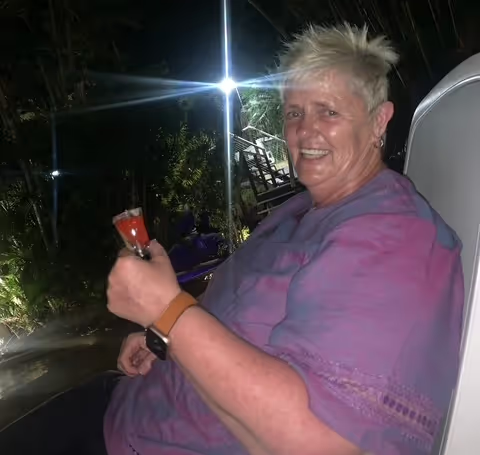
Those after effects were severe. Shellie lives with bipolar disorder, anxiety, and depression. For years, her drinking and mental health crises fed into each other in a relentless cycle. Life stressors would trigger binges, and binges would trigger mental health episodes.
"You put the two together and they just feed into each other," she says.
Her children had been on this journey with her since they were born. They'd seen the hospital visits, the relapses, the disappointment and worry. Shellie carries the memory of her son's face when she told him she'd started drinking again.
"The disappointment I saw in his eyes really broke me," she says. "As much as he was supportive and said, 'Mum, what are we going to do about this?' - just seeing that disappointment... those are all little snippets that stay in my head to remind myself not to pick up again."
She'd tried to get help before. Seven years earlier, after losing her mum, she'd spent six weeks in an inpatient rehab over Christmas - "one of the hardest things I've done." But she'd left saying she'd drink socially again.
"Which I can't drink socially and I can't drink at all," she says now.
The cycle continued. When her GP suggested connecting her to alcohol and other drug services, Shellie walked out.
"I said to her, 'I don't have a problem. I don't know what you're talking about,'" she remembers. "My picture of an ‘alcoholic’ was someone sitting in the gutter or down a laneway drinking out of a paper bag. I used to always go, 'That's not me. So I don't have a problem.'"
"Nanny, you were very silly last night"
It was her grandson who first planted a seed of change.
Shellie had started spending more time with her daughter's family, where weekend drinking was acceptable and normal. She was fun, laughing, the life of the gathering. Until one morning, her grandson looked up at her and said: "Nanny, you were very silly last night."
"That really touched me," Shellie says. "I thought, I need to be a nanny and a role model to my grandchildren."
But the real catalyst came on a camping trip with her daughter's family. Shellie drank so much that she nearly fell into the fire, and then she blacked out.
"That was my scary turning point," she says. "I could have fallen into the fire. Imagine how much my life would be different. I may not even be here."
That image stayed with her. As did another growing fear: she was getting older. Recovery from binges was taking a week instead of a day. She lived alone. What if she fell? What if she hurt herself and no one found her?
"As you get older, if that was to happen here at home on my own and I was to have a fall or knock myself out or break a hip - who's going to find me?" she explains.
Approaching 60 became a moment of reckoning. Shellie found herself asking: how do I want my life to look for the future?
"I choose not to drink again"
When Shellie's therapist from Mind Australia mentioned Clean Slate Clinic, Shellie went online and completed the suitability test. She was 59, scared, and still telling herself she didn't really have a problem.
But she reached out anyway.
"That fear - I always go back to that memory of falling in the fire," she says.
By the time she connected with Clean Slate, Shellie had already stopped drinking. The camping trip had frightened her enough that she quit on her own, determined not to start again. This meant she didn't need the formal detox week - instead, those check-ins became additional support time with her nurse.
"What I found is the program is flexible to your needs," Shellie says. "It's not a one-box-fits-all program."
From day one, Shellie was matched with Carol, a nurse who would stay with her throughout her entire journey. And something about Carol made all the difference.
"Carol's background and her experience made a big difference," Shellie explains. "I just saw her belief in me - the belief that she had in me that I would get through," Shellie says, her voice catching. "She held that torch of hope where I didn't hold that myself. I just thought, you know, I've done this my whole life, it's just going to be another cycle."
Carol became Shellie's cheerleader, celebrating milestones when Shellie couldn't celebrate herself because she was too afraid of failing again. The appointments gave Shellie something else she desperately needed: accountability.
"I don't want to hop on the screen and let anyone down," she says. "And knowing that I have an upcoming appointment, I can get things off and out of my headspace. It gives me the opportunity to look at things in another light, and then I go away and reflect and try to bring that into my life to move forward."
Shellie also started using the "I Am Sober" app, setting mantras and goals. Her mantra this time was different from seven years ago. Not "I'll drink socially again." This time: "I choose not to drink again."
The program worked around her life. Appointments were flexible. She could do everything from home, allowing her to work through her daily stressors as they came up.
"These stressors in life - we're in them every day," Shellie says. "By doing the program online, I could live and cope with all those stressors - rather than having to face them on the other side of my treatment.”
Discovering the other side of the fence
Shellie has a metaphor for what her life feels like now versus before.
"I spent my life on the side of the fence where the grass was dry - drought season," she says. "But now I'm on the other side of the fence where the grass is greener, the flowers are popping, the rainbows are out. Can you imagine that vibrance? That's just how my life is now."
Fifteen months alcohol-free, the changes are both profound and practical.
The brain fog is gone and her memory has improved immensely. She used to struggle to remember names, but now "there seems to be a lot more space up there to retain information." She's working three days a week. Her health and fitness have improved. And most importantly, she finally feels in control of her mental health.
"I'm a lot more balanced than what I have been," she says. "Bipolar is chaotic already, and when you put the drink on top of that, it just explodes. But now I'm quite balanced. I'm engaging in life, I'm being a mum and a nanny and a good friend."
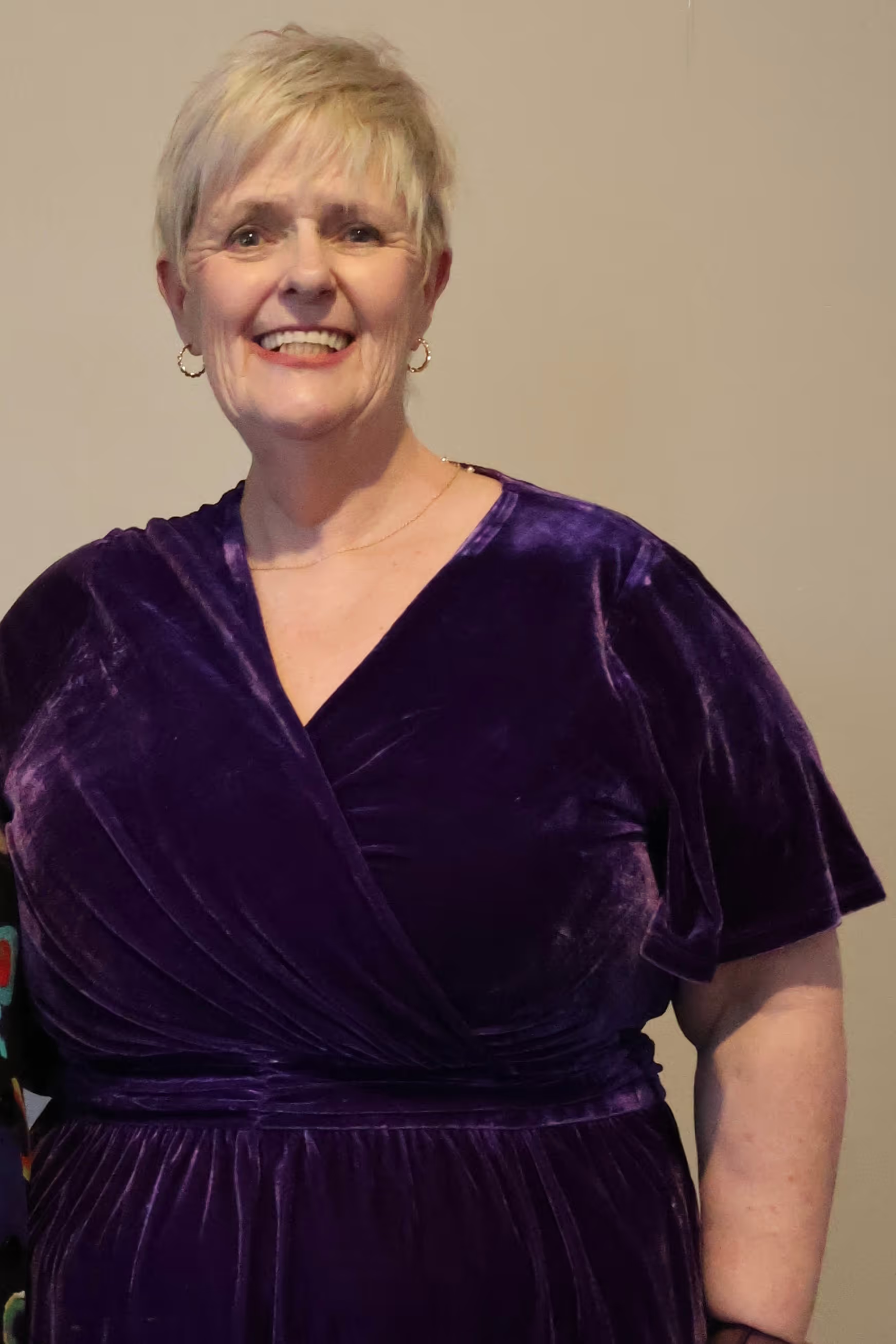
The emotional shift is perhaps the biggest change.
"I'm now experiencing the positive emotions of life," Shellie says. "Before it was all black and grim. But now I can see joy and happiness and fun."
She's also proud of herself in a way she's never been before.
"I would always go through life feeling worthless and helpless and unloved and minimised," she says. "But today I'm proud of myself. I'm proud that I can be there as a mum and as a nanny to my grandchildren. I'm a lot more present."
When her son and his partner announced they were expecting a baby, they said something that stays with Shellie: "It's even more reason to stay sober."
"That's always in the back of my head," she says. "As much as I'm doing it for me, the drain it puts on the family when I ring them up and say I've started drinking again..."
She trails off, then adds: "I want to live today. There were many times throughout my life where I didn't want to live, but today I want to live. And I'm living a sober, happy, healthy life now."
"You have to be brave"
When Shellie thinks about what she'd say to someone considering reaching out for help, someone who's scared of what life might look like without alcohol, her message is straightforward.
"You have to let down your barriers and be humble," she says. "There is help out there, and it's okay to get help. The people you're getting help from have the professionalism and the knowledge. They can teach you so much that can assist you on your journey. But you can't stay stuck where you are and not have quality of life without trying."
She also wants to challenge the narrow picture of what addiction looks like - the same picture that kept her from getting help for so many years.
"I used to think an ‘alcoholic’ was someone in the gutter with a paper bag," she says. "That's not me, so I don't have a problem. But I was a high-functioning binge drinker. I didn't drink every day, but when I did drink, I couldn't stop. You don't have to fit that stereotype to need help."
For older people especially - people in her generation - Shellie wants them to know they're not alone.
"You don't hear stories about people like us - it's more the younger ones," she says. "But in our generation we go through a lot of stressors too. Kids move on. There's loneliness. You're feeling isolated. Your body changes as you age. It's okay to reach out."
She also emphasises something that was critical to her own recovery: addressing mental health and addiction together.
"Mental health and addiction - the two come together," Shellie says. "If that stuff had been addressed early and looked into, my journey may not have been as chaotic. The two need to work together. There's enough stigma with mental health, but then you put addiction on top of that - that's more stigma. Let's remove the stigma and move forward and get the help."
Her final message is simple: "You have to be brave."
The torch of hope that Carol once held for her? Shellie's holding it now, too.

Former Health Minister calls for digital pathways in alcohol care
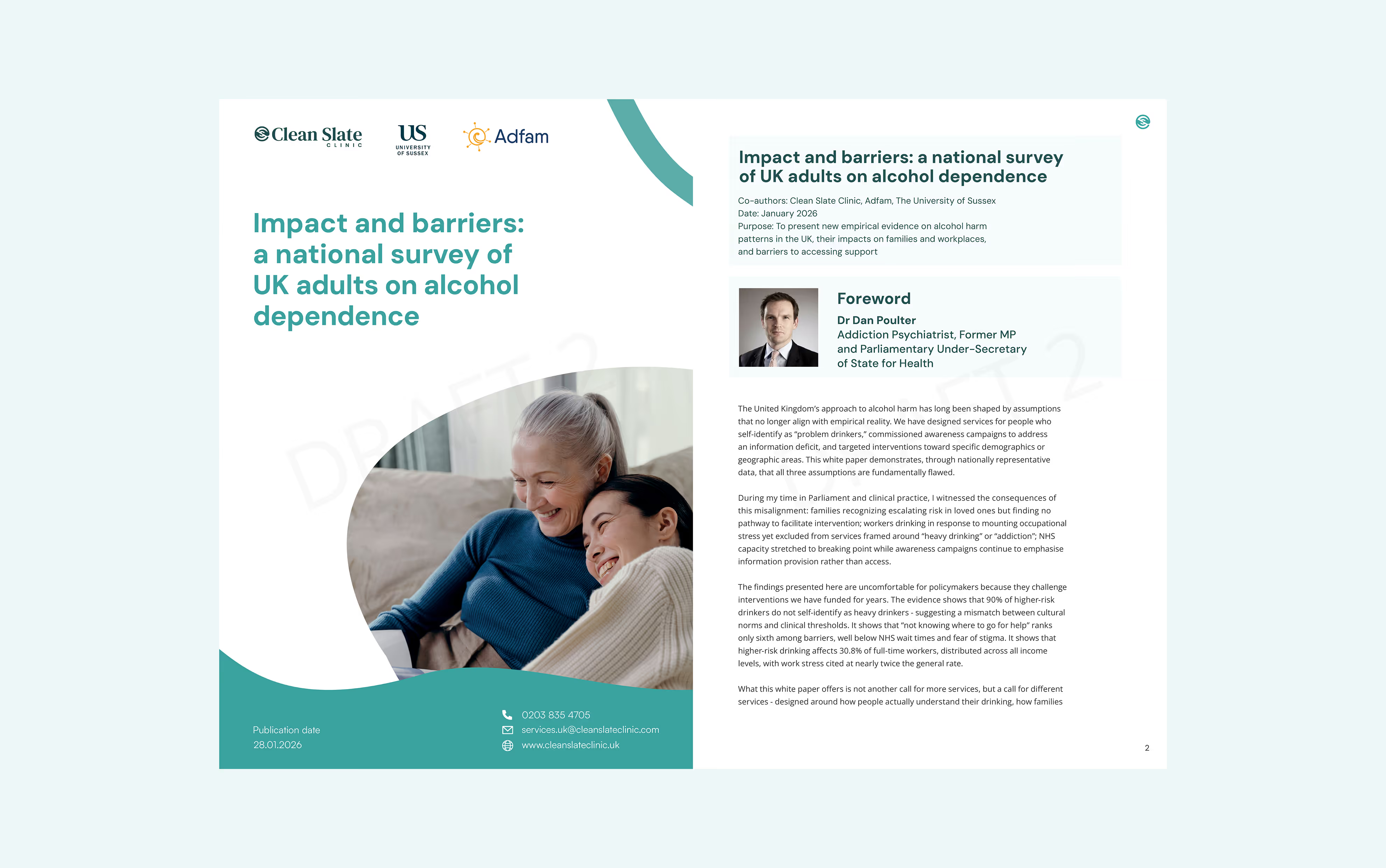
Former health minister and addiction psychiatrist Dr Dan Poulter is calling for urgent reform of alcohol services, warning that outdated pathways are failing millions of people who need support. Writing the foreword to a landmark white paper co-published by Clean Slate Clinic, Adfam, and the University of Sussex, Poulter argues that digital-first care is no longer optional, it's a clinical necessity.
The report, based on a survey of over 2,000 UK adults, found that NHS wait times and stigma are the biggest barriers stopping higher-risk drinkers from seeking help. Digital services, Poulter argues, directly solve both.
Clean Slate Clinic's remote, medically supervised detox programme is this model; discreet, flexible, and built around real lives. Read the full article in Digital Health.

Health Tech World cites Clean Slate's campaign for a digitally enabled redesign of alcohol services
A new report from Clean Slate Clinic, supported by Adfam and the University of Sussex, has found that nine in ten people drinking at clinically risky levels don't consider themselves heavy drinkers. The research is prompting urgent calls for a digitally enabled redesign of alcohol services, moving care out of hospitals and into people's everyday lives.
Clean Slate Clinic's Clinical Director Dr David McLaughlan highlights the gap that needs closing: “We’ve seen virtual wards successfully reduce admissions in respiratory and cardiac care. Yet alcohol withdrawal, which has been estimated to cost society £27 billion a year, continues to be managed through inpatient stays. Digital pathways allow clinicians to monitor patients remotely during that high-risk window and intervene before they return to A&E.”
Pia Clinton-Tarestad, Clean Slate's Co-founder and CEO, added: “I know from personal experience how supervised, remote-based detox programmes can help patients get safe, structured treatment earlier, without disconnecting from jobs, family and daily life. Our evidence shows that the Clean Slate Clinic model can help the NHS cut readmissions by almost half, while increasing sustained abstinence from around 30 per cent to 70 per cent.”
Read the full article here

As featured in Drink and Drug News: nine in ten higher-risk drinkers don't know it, reports Clean Slate Clinic
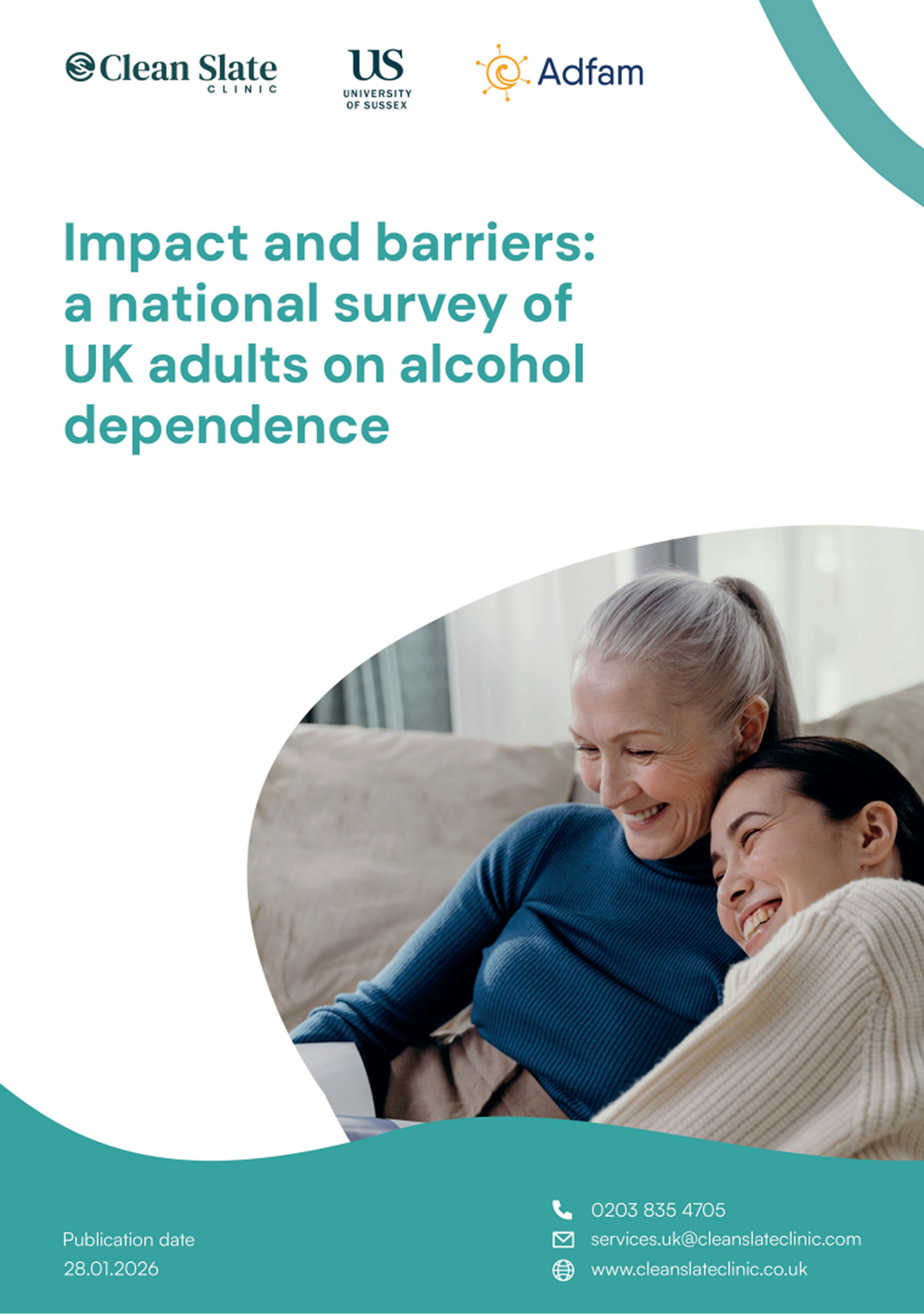
Clean Slate Clinic, Adfam and the University of Sussex have published new research revealing a fundamental disconnect at the heart of the UK's alcohol treatment system: the people most at risk are largely not the ones seeking help, because most don't recognise themselves as having a problem.
The findings point to stigma and NHS waiting times as the primary barriers, not lack of awareness, with implications for how services are designed and who they can realistically reach. Former health minister Dan Poulter, who wrote the foreword, calls the conclusions uncomfortable for policymakers, challenging approaches that have been funded for years.
The report makes the case for home-based detoxification models and family-inclusive pathways as practical alternatives to a system that is missing the majority of those who need it.
Read the full article on Drink and Drug News.
.svg)
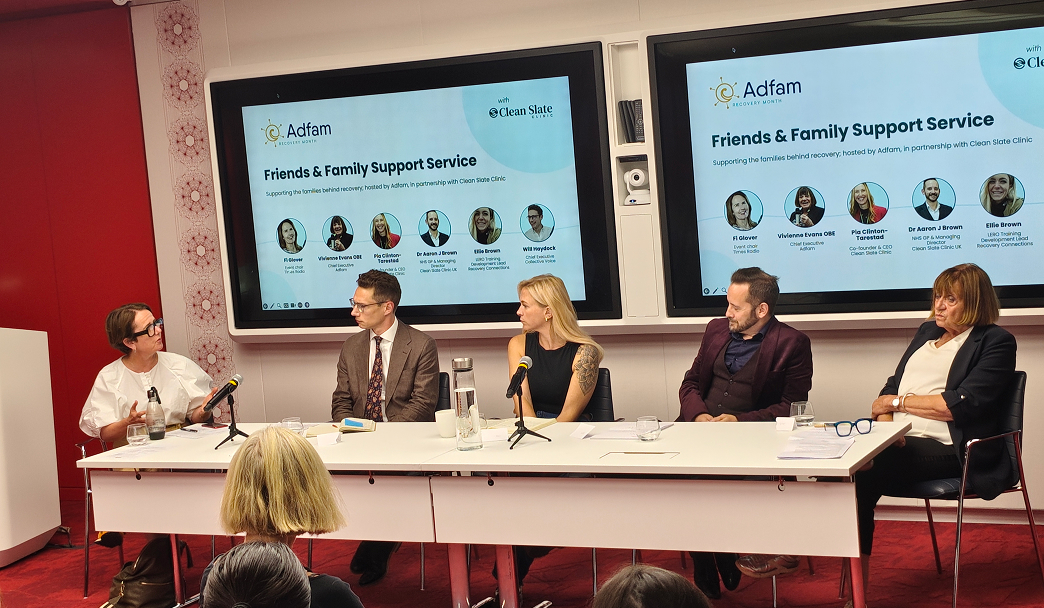




Ready to get started?








%20(1)%20(1)%201%20(1).png)