.avif)



Blog Posts
Supporting the families behind recovery: launching our Friends & Family Support Service with Adfam
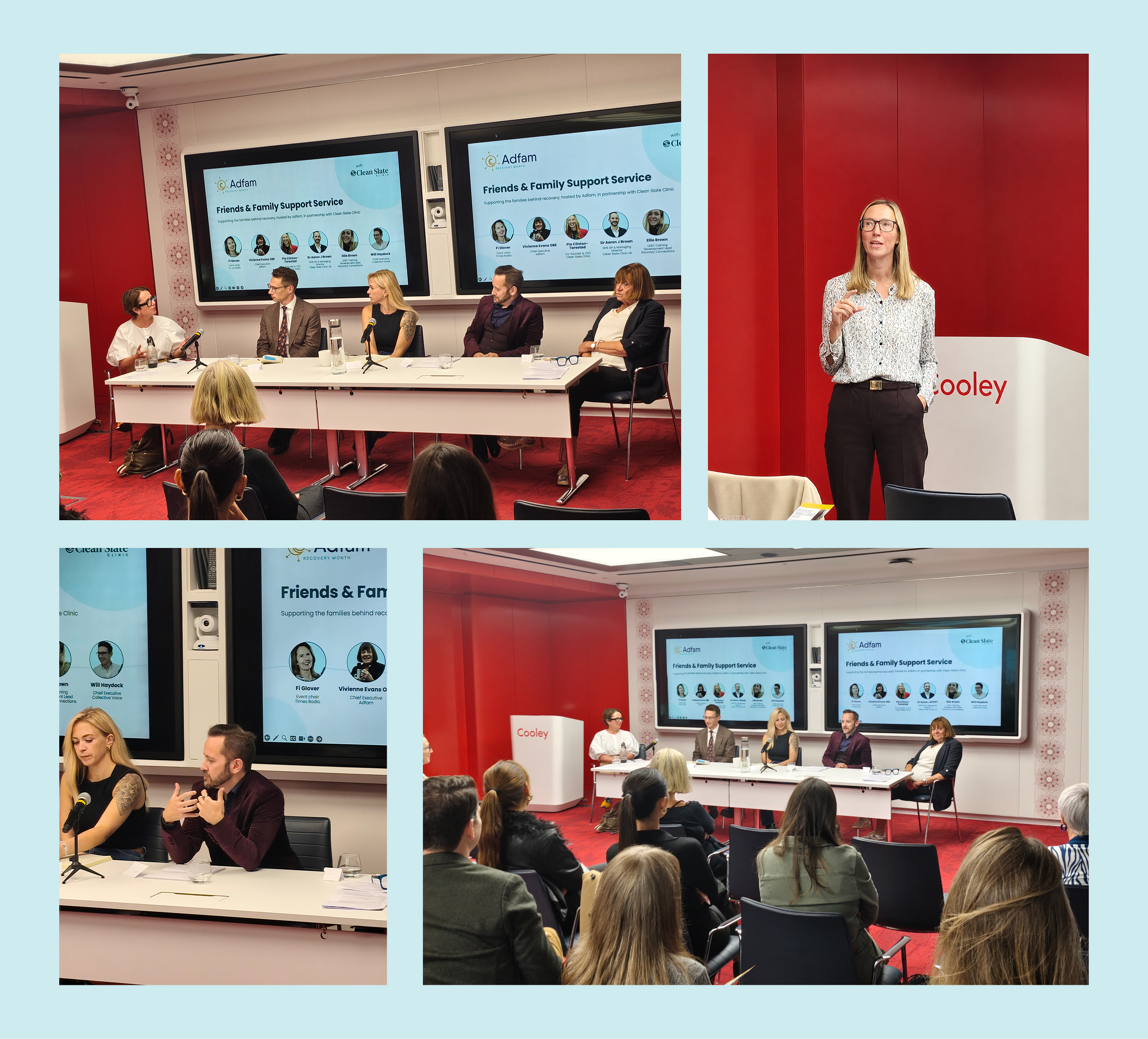
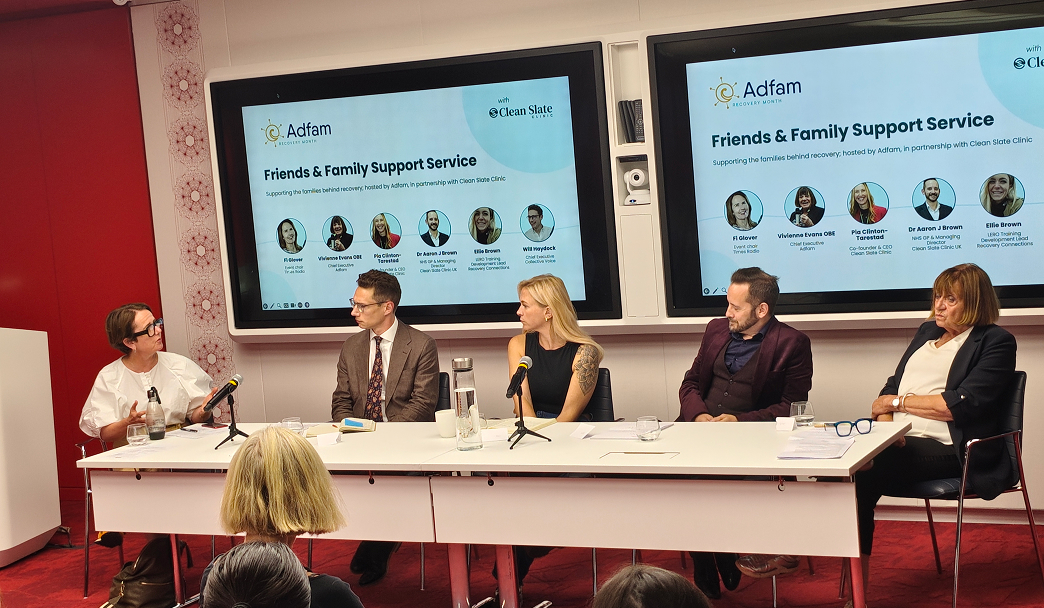
September is Recovery Month. We joined Adfam at Cooley LLP in London to launch our Friends & Family Service, and to make the case for the people who support those in recovery.
Recovery Month rightly puts individuals in recovery at the very centre. But behind almost every one of them is a partner, a parent or an adult child living with the same illness.
Adfam is England's leading families and addiction charity, and estimates that more than five million people here are affected by someone else's drinking, drug use or gambling. Opening the event, Chief Executive Vivienne Evans OBE set out why that matters to anyone designing treatment. Adfam's Above and Beyond report found that three quarters of people in recovery credited family members with a significant role in it. Only a quarter said their families received specialist support in return.
Launching the Friends & Family Service
That gap is what our new service is built to close. Our Co-founder and CEO, Pia Clinton-Tarestad, launched the Friends & Family offer, delivered with Adfam, extending structured support to the people around every Clean Slate Clinic client. Because our care is delivered at home and online, those people are already part of the picture.
The family behind recovery
Chaired by broadcaster Fi Glover of Times Radio, the panel opened with Will Haydock, Chief Executive of Collective Voice, on where funding for families does and does not reach.
Dr Aaron J Brown, NHS GP and Managing Director of Clean Slate Clinic UK, and Ellie Brown, LERO Training Development Lead at Recovery Connections, spoke together, in the part of the evening that will stay with most of the room. Aaron and Ellie are partners, and they talked with warmth and candour about Aaron's recovery, from both sides of it.
Hearing a clinician describe his own dependency alongside the person who lived through it, made visible what statistics cannot. Ellie described the challenges; the vigilance, the unpaid caring work no one records, and the loneliness of it. It was the clearest argument for charities like Adfam.
If you are supporting someone through problems with alcohol, help is available for you as well as for them. You can find Adfam's services at adfam.org.uk. Our thanks to Adfam, Fi Glover, our panellists, and Cooley LLP for hosting us.
Clean Slate Clinic named a finalist in the UK Social Enterprise Awards 2026
A different way to do business
Social enterprises are businesses that trade for a social or environmental purpose, and reinvest at least half their profits to further that mission.

Our vision for what comes next
Earlier this year, we published a white paper with addiction charity Adfam and the University of Sussex. It found that over 17 million Britons may be drinking at dangerous levels without knowing it, and that long NHS waiting lists, fear of stigma and the cost of private treatment stop many people from asking for help.
Our vision is to help move alcohol care away from crisis-led, in-person models and towards earlier, digitally enabled support in the community. Medically supervised home detox reduces treatment costs compared with in-patient care, which means more people can get the right help, sooner.
We’ve now supported more than 5,000 people across Australia and the UK, and earlier this year we were named Impact Enterprise of the Year at the 2026 Australian Impact Investment Awards. Being shortlisted here in the UK is a proud moment for our growing UK team.
Commenting on being a UK Social Enterprise Awards finalist, Dr Aaron Brown, GP and Managing Director of Clean Slate Clinic UK, said:

Dr Aaron Brown,GP and Managing Director, Clean Slate Clinic UK
Find out moreabout the UK Social Enterprise Awards at socialenterprise.org.uk.
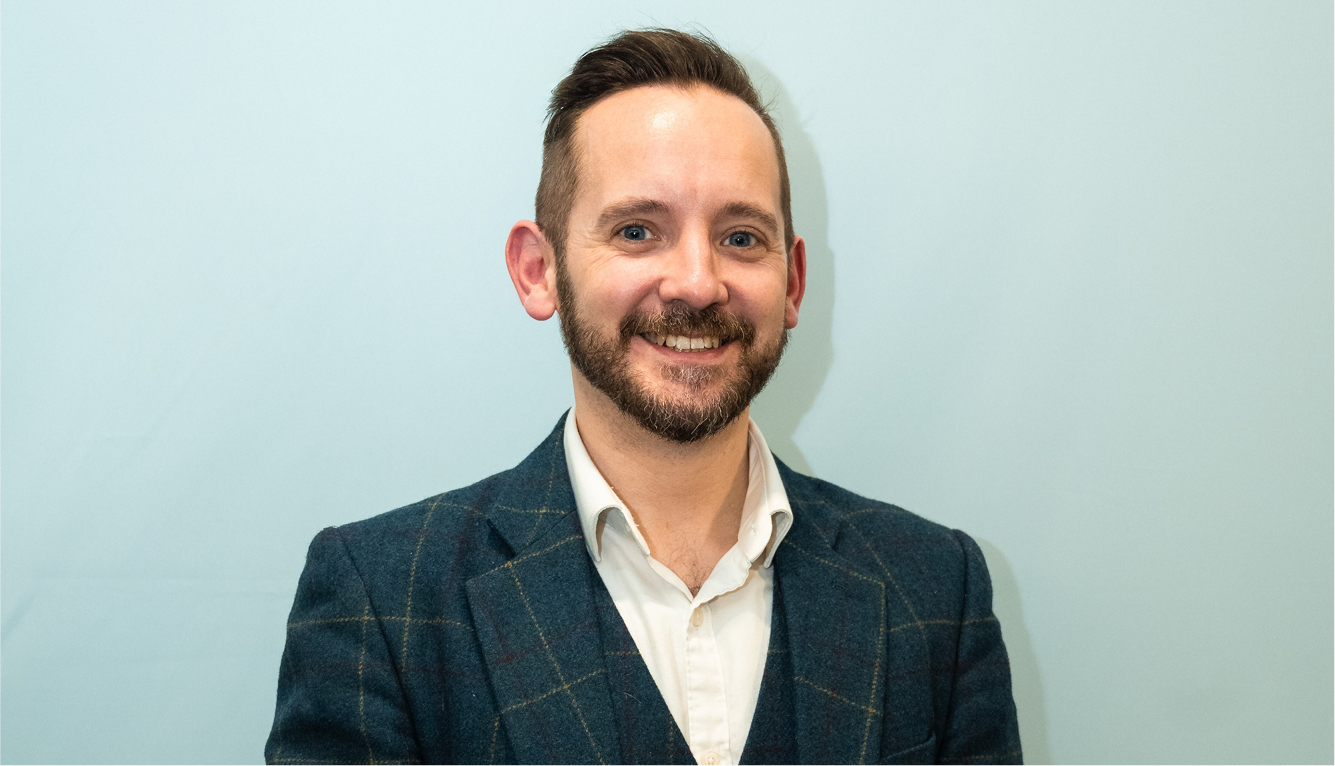
Reclaiming Life: Home Detox & Healing with Dr Aaron Brown
Reclaiming Life: Home Detox & Healing with Dr Aaron Brown
In a recent episode of the Your Choices Matter podcast, host David Lilley sat down with Dr Aaron Brown, Managing Director of Clean Slate Clinic UK, for an honest conversation about alcohol dependence and what it actually takes to break free. Aaron brings a rare combination of clinical rigour and lived experience: a York Medical School graduate and former GP partner, he faced his own cycle of dependence after shielding through the 2020 pandemic.
Listen to the podcast & learn more
- Clean Slate Clinic UK: explore the 12-month home detox programme or book a free exploratory call
- Care Quality Commission (CQC): verify clinical registration details
- SMART Recovery UK: self-empowered recovery tools
- Adfam: support for families affected by substance use
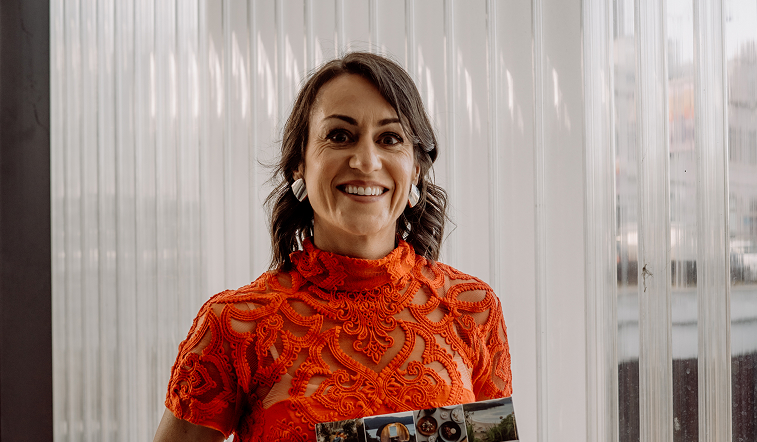
Alice's Story
Alice doesn’t fit the picture most people have in their heads when they think about alcohol dependence. She was a top-20 junior Australian tennis player in her teens, training daily on a tennis scholarship in the United States. She finished her university degree while competing. She came home to Tasmania and built a career in tourism, working as a travel writer for Tourism Tasmania, launching her own tourism brand, Tailored Tasmania, and even building a home that featured on Grand Designs Australia. She hosted events that drew hundreds of people. On paper, she was thriving.
The drinking sat alongside all of that.
She wasn’t waking every morning needing a drink. She wasn’t unemployed. She wasn’t visibly unravelling in public, at least not at first.
“I could hold everything together. Until I couldn’t.”

“Who have I let down this time?”
For a long time the daytime version of Alice’s life held. She was working, exercising, socialising, showing up. But she was also drinking before catch-ups, cancelling plans, and waking with a familiar dread, trying to piece together what she’d said or done the night before.
“I’d wake up thinking, who have I let down? What did I say? How has the ‘agent of chaos’ caused damage this time?"
Where it began
Alice knew from a young age that she was gay. Growing up in a Catholic community in 1990s Tasmania, she learned early that it felt safer to keep that to herself, and the strain of hiding, year after year, was isolating. Drinking became a way to cope.
“It was easier to adopt the A-student and tennis player identity than to be honest about who I was, at a time when being gay was still illegal in Tassie.”
It softened the nervousness and added a bit of excitement to social occasions. At first it was ordinary teenage binge drinking; a way to fit in and kiss the boys. Over time, it became something she reached for whenever she felt overwhelmed or unmoored.
Coming back from the United States in her early twenties made that worse, not better. She’d lost the daily structure of elite sport, and the identity that came with it.
“I went from training three hours a day to not knowing who I was. I thought I’d come home and my Aussie life would be where I left it. Naturally, it doesn’t work like that.”
The revolving door
Alice entered rehab for the first time in 2008. Over the following years, she would return again and again, twenty-six admissions in total.
Each one followed the same pattern. She’d detox safely. She’d stabilise. She’d feel clear-headed and determined. Then she’d be discharged, and within days, weeks or months, she’d relapse.
For a long time she saw that as a personal failing. She doesn’t anymore. After detox, cravings intensify, sleep is disrupted, emotions run close to the surface, and life picks straight back up at full pace. Without structured follow-up, Alice now understands that relapse is common. Not because people are weak, but because the scaffolding drops away the moment they walk out the door. And in Tasmania, ongoing specialist care was hard to come by. The support was concentrated in acute settings, and aftercare was thin.
The admissions began to feel like a loop.
“I’d see the same faces. Patients coming back. Not because they didn’t want to get better, but because there was nowhere else to land, and we’d hit repeat on the same programme of support. I feel most grateful for the soft landing, but something was missing for me, personally. I haven’t been back to rehab since 2019 … another way called.”
High-functioning, and hiding
Throughout all of it, Alice kept working. She kept up relationships. She kept exercising. She appeared, to most people, entirely capable, and that contrast created its own kind of isolation despite the unwavering support of family and close friends throughout her plight.
At home, she hid bottles in the washing basket or outdoor shrubs.. She rearranged plans around access to alcohol. She got very good at playing down how much she’d had.
“Managing a drinking life is a full time job. It’s exhausting.”
She’s someone who tends towards all-or-nothing, she says, and that ran through everything.
“If I trained, it wasn’t for a 5k but for a marathon. If I drank, I applied the same rigour and drank hard.”
In recovery models that measured sobriety in days, a single slip felt catastrophic, enough to trigger a spiral of self-reproach. It took years to understand that a relapse didn’t erase everything that came before it.
“You can learn from it, use it as a data point. Or you can punish yourself. Punishment never worked for me.”

A different approach
The shift came when Alice found recovery framed not as moral correction, but as long-term medical care.
Through Clean Slate Clinic, she came across a model that carried on well past detox. Telehealth consultations gave her continuity. Regular check-ins created accountability without shame. Most importantly, the support continued through the period that had always undone her before: the weeks and months after the initial withdrawal, when she was at her most vulnerable.
Rather than hoping she’d simply be stronger this time, she had structure. She was helped to plan for the moments she knew were coming: Christmas, birthdays, work events, grief, loneliness.
“I remember smiling with relief during my first doctor consult with Clean Slate. Finally I was heard, met right where I was in a non-judgemental and deeply encouraging way. Suddenly the journey ahead, no matter how apprehensive I was about it, felt shared with experts. These were professionals who could anticipate the bumps, offering guidance as we navigated the challenges and triumphs across a full year. The acceptance and kindness I felt through this comprehensive care ... really mattered.”
Life now
Alice is sober, and open about who she is and her recovery. She trains for marathons. She runs trails. Climbs mountains. She wakes up without dread.
Hard days still come. The difference is that she meets them head-on.
“If the day turns south, I deal with it. I sit in the hard feelings and don’t soak them with alcohol. Nothing is unmanageable this way.”
What had been missing through all those years of crisis and discharge, Alice came to understand, was connection. Not just clinical containment, but people who stayed alongside her, and a reason to stay present in her own life. The support that finally held was the kind that didn’t end when the detox did.
Today, that connection looks like wellness retreats she runs in Tasmania through Wild Wellness Method, movement and conversation, and mornings that begin clear-headed rather than guilt-filled. The small things, a friend reaching out, a plan she can keep, are the ones that tell her how far she’s come.
The shame that kept her silent for so long has softened, and she talks about all of it now because she knows how many capable, high-functioning people are quietly wondering whether they’re the only ones who can’t “just moderate.” She shares her story in the hope that it gives others permission to talk.
“It’s a lonely bloody road when you try to battle it on your own.”
She believes remorse and secrecy are weary sisters of drinking itself. Once people know you’re struggling, she says, they don’t want to see you drink, so you get better at hiding it.
“It just becomes more secretive and shameful. In turn, the people I loved the most had to suffer through my dishonest ways when it came to the bottle. Values I stood by were drowned by taking another sip.”
If she could say one thing to someone stuck in that cycle, it would be this: don’t go it alone.
“The opposite of addiction is connection. If you’ve tried shifting your relationship with alcohol alone before … How has that gone for you? Don’t take 30 years to climb out like me … fast track the journey and grab a trusted hand … a guide by your side.”
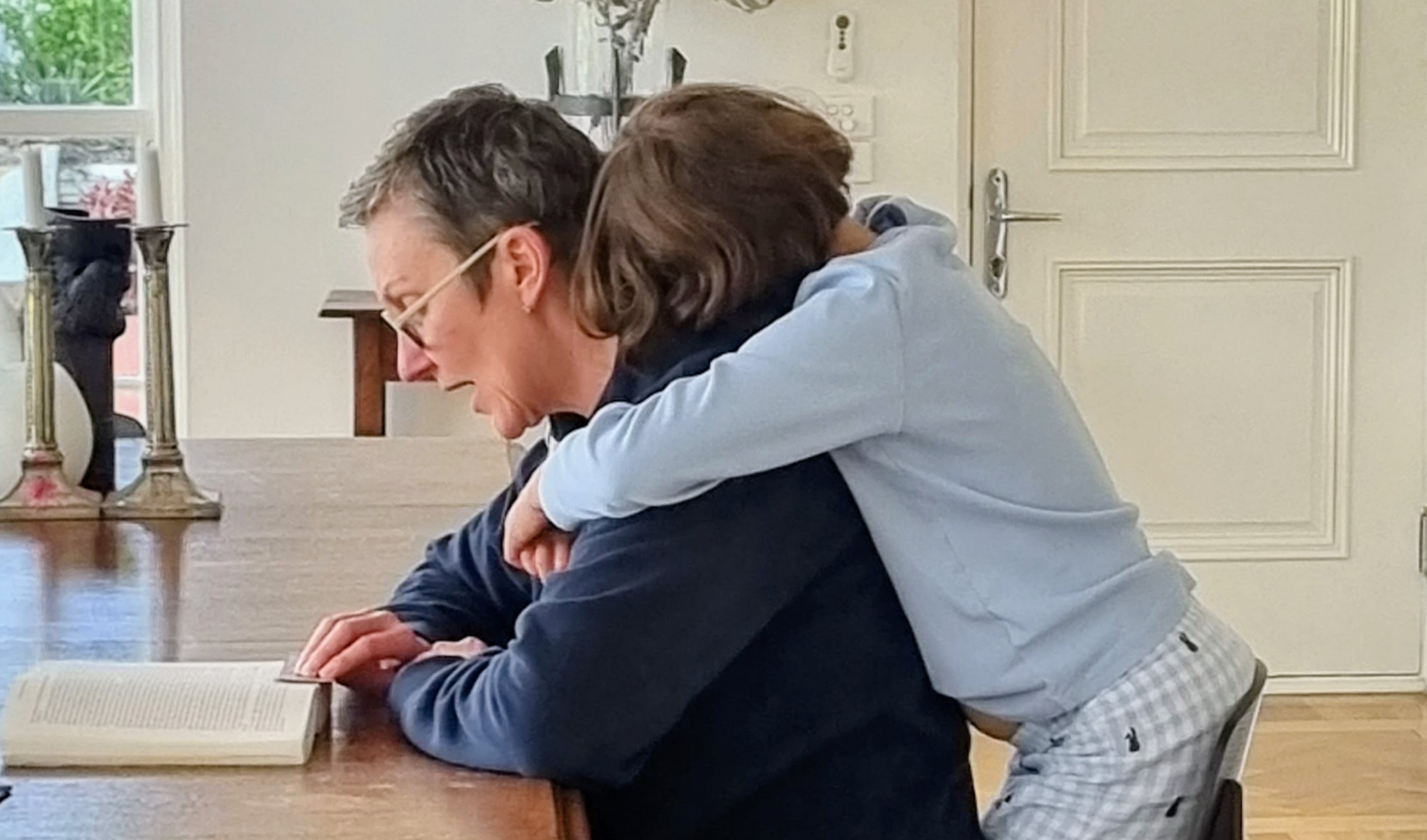
Charlotte’s Story

The wine glass
It was the kind of drawing that usually ends up on the fridge. It had all the hallmarks of childhood: bright colours, stick figures, careful handwriting. But when Charlotte took a closer look at it, her heart dropped.
In the picture, she was holding a wine glass.
“I looked at it and thought, oh God. I’m passing this on to my kids,” she says. “They’re going to learn it from the get-go. And that, for me, was the bit that made it not okay anymore.”
It wasn’t the first time she’d questioned her drinking, but it was the first time she couldn’t look away.
This wasn’t just about her anymore, instead, it was about what was being normalised. About what her children might quietly absorb as ordinary.
And standing there with that card in her hands, she knew something had to change.
“I always knew”
Charlotte started drinking around fourteen. Boarding school culture made it feel inevitable as everyone drank, and heavily at that. What began as teenage experimentation slowly threaded itself into adulthood until alcohol wasn’t an event; it was simply a part of the day.
With the exception of her two pregnancies, when she stopped without much difficulty, she drank almost daily.
“I’ve never met a glass of wine that I didn’t finish,” she says. “I always knew it was probably something I didn’t have the control over that I really wanted to have.”
For years, that knowing hovered in the background. Around five years ago it became harder to ignore. She began negotiating with herself: spacing drinks with water, setting limits, promising tomorrow would be different. The familiar cycle of trying and failing chipped away at her confidence.
“I started to feel like it was owning me rather than just being something I did.”
If there wasn’t alcohol in the house, Charlotte would feel anxious - and she hated that something else had that much influence over her choices. Still, recognising the problem and acting on it were two very different things.
The help that didn’t land
Over the years, Charlotte raised her drinking with GPs - never explicitly saying the words “I have a problem.” She would circle around it, hoping someone would hear what she couldn’t quite say outright.
“The response was very much, ‘You’ll be right. Just cut down a bit.’”
Looking back, she sees those moments differently.
“I was calling for help. I just didn’t have the courage to say it clearly.”
No one dismissed her intentionally, but no one recognised the weight behind what she was hinting at either. And so the years continued. She knew something wasn’t right and she was unsure of what to do next.
Three years of knowing
Thinking back, Charlotte says it took about three years from fully recognising the issue to reaching out for support.
Three years of bargaining that slowly turned into quiet frustration, three years of feeling stuck and unable to make any progress.
“You almost feel paralysed,” she says. “You know you need help, but you don’t know how to ask for it properly.”
Each failed attempt at moderation reinforced the belief that she should be able to fix it herself. It was, in her words, “a pretty unpleasant time.”
Eventually she came across an online community that led her to a programme she could access from home. It didn’t feel institutional or overwhelming, rather it felt manageable.
She booked a call, then cancelled it.
“I was probably just scared.”
She booked again. And for reasons she still can’t fully explain, the day she made that second call she stopped drinking. Not as part of a grand plan, but because something in her had shifted.
By the time she had her first clinical appointment, she’d already been alcohol-free for nearly two weeks.
What struck her most wasn’t the structure of the programme, it was the fact that she was finally being heard.
“It was the first time I’d said it out loud and someone spoke back to me in a language I understood. It was remarkable.”
After years of minimising and half-admissions, someone responded without dismissal.
Responsibility with support
What mattered to Charlotte was that she remained in her own life while making changes.
“I liked that the responsibility was still mine, but I had support.”
She didn’t want to be removed from her world; she wanted to learn how to live in it differently. Regular check-ins gave rhythm to her weeks. Meetings that initially terrified her, slowly became grounding.
“I really struggled to go to the first few,” she admits. “Now I think they’re magic.”
The combination of structured support and shared experience helped her build tools she hadn’t known existed. Practical strategies, yes, but also a different way of seeing herself.
One of the biggest shifts for Charlotte was learning not to tie her worth to drinking, or to not drinking.
“It’s hard to stop measuring yourself against it,” she says. “But eventually it becomes just one part of your story, not the whole thing.”
Appointments created accountability, and knowing someone would ask how she was going added gentle momentum. Over time, the process felt less like crisis management and more like steady growth.
“It became a really nice rhythm.”
More space
When Charlotte describes her life now, she talks about space.
Her mornings began to feel spacious, with no headaches and no fog - and that sense of ease gradually extended into her mind.
“It’s really neat to wake up and just get on with the day.”
The anxiety that once hummed in the background has softened, and her life now feels more intentional rather than reactive.
“I don’t tolerate as much crap as I used to,” she says, smiling. “If something’s not good for me, I step away faster.”
The fear versus the reality
Before she stopped drinking, two fears loomed large. The first was around socialising and being the “different” person in the room - particularly in a culture where alcohol threads through celebration and grief alike, she worried about standing out.
The second was that life would be boring.
“I hadn’t really done anything fun without alcohol involved,” she says. “I thought alcohol equalled fun.”
However, neither fear materialised the way she expected.
“No one really questioned me,” she says. “If anything, people were curious.”
Some even began reflecting on their own drinking in those conversations. And as for fun?
“Fun is fun,” she says. “It doesn’t matter what you’re holding in your hand.”
These days, if a passing thought suggests a glass of wine, another voice answers quickly.
“Almost immediately I think, ‘Oh my God, no you wouldn’t.’”
As time passed, it felt less like deprivation and more like she had found her new normal.
The second card
Recently, her daughter found that original Mother’s Day card, the one with the wine glass.
“She said, ‘I need to draw that again without the wine glass. Because you don’t drink anymore.’”
Charlotte pauses when she tells this part.
The legacy she’d feared, the quiet message that a wine glass is how mum unwinds - has shifted. Not through perfection, but through action. Through doing something hard and staying with it.
Your discomfort is enough
If someone is wondering whether they should reach out, Charlotte’s advice is simple.
“Just do it.”
But more than that, she wishes someone had told her sooner that you don’t need to hit a dramatic rock bottom.
“If what you’re doing makes you uncomfortable, that’s enough,” she says. “You don’t need someone else to validate that.”
You don’t need to meet a stereotype. You don’t need to wait until things fall apart. If you wake up wishing you hadn’t done what you did the night before, or if a small voice keeps asking whether this is really how you want to live - that’s sufficient.
For Charlotte, acting on that discomfort changed the trajectory of her life.
“My goodness, my life is so much better without alcohol,” she says. “There’s nothing I miss about drinking. It just becomes normal not to. And I wouldn’t want to go back in a million years.”
There’ll be another card this Mother’s Day, and this time, Charlotte won’t be holding a wine glass.

Lauren's Story
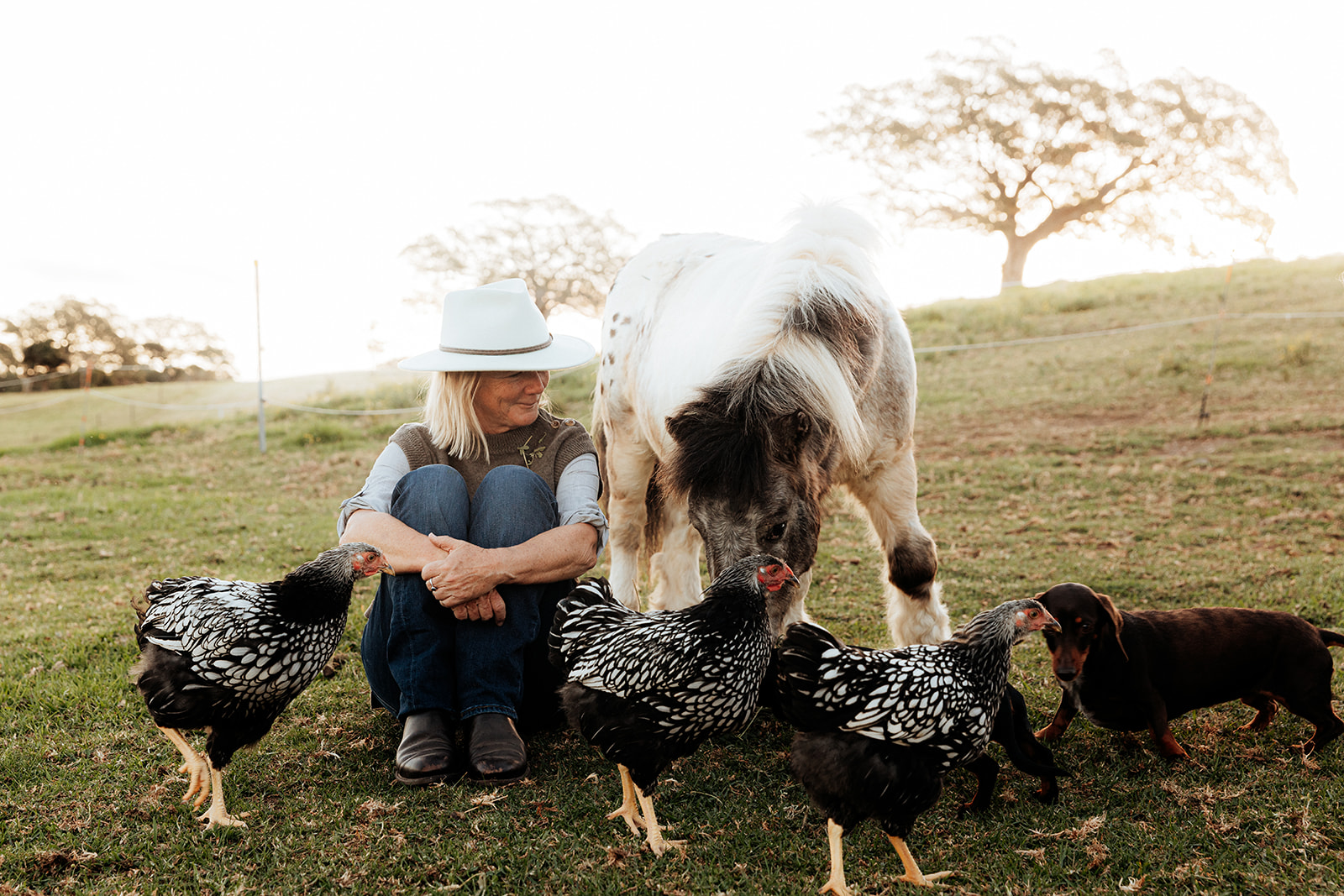
The 10-week wall
Lauren could stop drinking, that wasn't the problem. She'd done it before, for years actually, and when things got difficult again, she could still manage periods without alcohol. But there was always a wall.
"I had managed to stop for periods, but 10 weeks seemed to be a tipping point," Lauren says. "I’d get to that point and before I knew it, I’d just be back doing it again."
She had tried everything: moderation strategies, measuring out drinks, self-education, therapy, naturopaths, diet changes, books, apps, podcasts and sober coaches. All the things.
Some of it helped, to a point, but nothing stuck long-term. "I just didn’t know why I couldn’t get past that point." And every time she hit that wall, the shame spiral would start all over again.
The second time around
Lauren had been alcohol-free for years. She'd done the work, found her footing, and moved forward. Then 2020 happened and Lauren went through a marriage breakdown, COVID and a move. So many things changed at once, and drinking slowly crept back in.
From the outside, Lauren was still functioning. She ran her own business working with horses, supporting people through equine therapy. She showed up for work, held it together, but inside she was falling apart.
"I felt myself becoming unhealthy. I just didn't seem to have the energy and drive that I wanted," she remembers. "And I was definitely isolating myself. It becomes a really private process."
The worst part was the disconnect between how she was supporting others, and how she couldn't seem to support herself.
"The work I do with my horses, supporting people - I don't want to be a fraud. I don't want to be doing this and then running in the door and having a drink. That just doesn't add up for me."
She knew there were other ways to be, to live and to take better care of herself. But knowing and doing felt like completely different things.
The illusion of “willpower”
Lauren kept setting goalposts. "I'm going to be 50 in three months. I'd really like to not be drinking at that point." Fifty came and went, and still nothing changed. Then New Year's, then another birthday - more goalposts she just couldn't meet.
"It puts so much pressure on you, and you’re really hard on yourself for not being able to do it. For not having the willpower, the strength - whatever. You say terrible things to yourself over that inability to change."
It wasn't from a lack of trying. Lauren was always searching, whether it be online, or through different books and programs - she’d constantly be looking for the answer, convinced it had to be out there somewhere.
The 12-month factor
When Lauren found Clean Slate online, a few things drew her in. First the privacy of being able to be at home, the ability to do the maths on what she was already spending versus what it would cost. And most importantly, the 12 months of ongoing support.
"That was the biggest thing for me, knowing that I would have someone for that long-term period. Because I knew three months was okay, but as soon as I went past that point, I was back in deep."
She signed up and soon after received a call from her nurse, Fiona.
Working with Fiona was different from the start - it was a softer approach with no big production. After the preparation phase, Fiona asked: "Have you thought about when you’d like to stop?" Lauren said no, not really. Fiona responded, "Let's just do it tomorrow then."
But it wasn't a straight line from there. Lauren dipped in and out, the pattern she'd always had, except when it happened this time, Fiona helped Lauren to reframe her experience.
"She just took the ‘bigness’ out of it. For once, it didn’t feel like a big deal. And that taught me, and my nervous system, not to panic about it."
Instead, Fiona helped Lauren notice patterns. "How does that feel? What was going on?", she’d say. Constantly assessing that process and what may have been happening. Every check-in, Lauren had something to explore: a course, a book or someone to read about. There was always something to investigate.
"Being curious about the what’s and the why’s is a big part of recovery."
The missing piece
Through their conversations, Fiona had been noticing things - patterns in how Lauren talked about being overwhelmed, about anxiety and the way she approached her work and her life.
"It was almost like sabotage, but it wasn't on purpose."
And then Fiona asked: "Have you ever looked at having a mental health diagnosis? What about ADHD as a possibility?"
Lauren knew there was research around later-in-life diagnoses for women, and she knew that women were often overlooked as children - but she'd never connected it to herself.
"I did some reading, checked it out, and was quite shocked at how my whole life had potentially been affected by this without me knowing. It gave an explanation to so many things."
She found a psychologist, got diagnosed, and started medication. "That was probably the biggest game changer for me."
Because suddenly, the pattern made sense. The 10-week wall made sense. The way she'd been trying to regulate herself through alcohol - it all made sense. She'd been self-medicating without even knowing it.
"As soon as I went through that process and got the diagnosis, alcohol just became irrelevant." It was the final piece of the puzzle.
Care of self, not self-care
The ADHD diagnosis opened the door to understanding so many other things affecting Lauren's wellbeing. Perimenopause was hitting hard, she had been dealing with bouts of sleeplessness, hot flushes at night, extremely low iron levels that were almost debilitating, things she'd just been trying to push through.
"You think you’re okay, even as things are getting worse. But actually stopping to do that ‘care of self’ stuff - that’s something else entirely."
She makes a distinction: not "self-care" in the luxury sense, but "care of self". The foundational things your body actually needs like food, water, supplements - the basics.
"When you're drinking, you rely on the sugars in what you're drinking to support you through the day. You don't worry so much about food. But when you stop drinking, there's that really well-rounded support system that you have to put in place for yourself. And you have to notice when things aren't quite right."
Movement and mindfulness became important too: just walking down the bike track with the dogs, and being present with the animals she works with.
"Whatever they're doing, you’re with them and you’re watching them. You’re not thinking about other things."
And she became protective of her energy and her space. "I'm very careful about who I share my time with now, because that's all part of what keeps me healthy and on track."
What's different now
When Lauren talks about how her life has changed, the list is comprehensive. "There’s more time in every day. More things get done. There's this new-found strength and confidence in my ability to set my mind on things and be able to do them."
For years, Lauren had beaten herself up, telling herself she was weak because she couldn't stop drinking. Now she sees her own strength clearly.
"There’s more clarity, more drive and direction. I can make good, clear decisions quite easily. There's a sense of freedom where you can just pick up and do anything at any time. You don't have to think about, 'Can I drive my car? Can I do this?'. There's nothing holding you back."
The physical transformation has been significant. Lauren had been watching herself put on weight week after week, feeling like this was just how things were going to be now. Now she's gone from "I just keep going in this direction" back to physically feeling like herself again.
But perhaps most striking is the transformation in her work. Lauren runs programs for women, working with horses to support people through difficult experiences.
"The difference in my ability to do my work has been chalk and cheese." Focus and procrastination were things that she'd struggled with her whole life - but now, they were beginning to feel easier.
"I haven't mastered it yet, but I've definitely improved a great deal."
And through all of this - the ADHD diagnosis, the perimenopause support, the foundational care and the boundary-setting - Lauren has arrived at something profound: "I feel more myself than probably I ever have."
Finding awe
Whilst on the journey of consuming endless amounts of content, there was one idea that stuck with Lauren. It was from Julie Goodwin’s book, who was a past MasterChef winner that’s been open about her own journey with mental health and alcohol - and the idea was simple: awe is the answer.
"Being in awe of something - nature, birds, whatever completely enthrals you and takes you somewhere else. That’s a big help."
For Lauren, that's often found outdoors. Taking in light, beauty, nature, trees, birds, the sky, and being surrounded by animals who require her full presence. "That’s become my thing."
Sometimes she needs a change of scenery, but mostly, she's found her rhythm in the life she's built, surrounded by horses, dogs and the natural world. "Give me a paddock or a bushwalk and I don't care about much else."
It's about everything else
When Lauren thinks about what she'd tell someone considering reaching out for help, she comes back to one thing. "Just do it. What have you got to lose? The all-around support, the learning about yourself that you do in the process - it doesn't even become about the alcohol. It's about everything else."
For Lauren, "everything else" was discovering she had ADHD, understanding why her nervous system worked the way it did, and recognising the perimenopause symptoms that were making everything harder. And finally, learning about foundational care, not as a luxury, but as a necessity.
"We grow up and we don't learn that stuff. We don't learn nervous system regulation and awareness. So we seek it in other places."
For her, that other place had been alcohol, but it was never really about the alcohol itself. It was about trying to regulate a nervous system that worked differently than she'd understood. Trying to function through perimenopause without support, and trying to manage overwhelm without the right tools.
Once she understood those underlying pieces - the ADHD diagnosis, the medication, the awareness of what her body actually needed - the 10-week wall disappeared. Not because she suddenly had more willpower, but because she finally understood what was actually going on.
"It's a very soft, gentle process of relearning how to regulate - how to be okay."
Walking, being active, being surrounded by animals who ground her, taking in beauty and nature, and choosing carefully what gets her time and attention. These aren't strategies to avoid drinking. They're ways of building a life that actually works for who Lauren is, a life where alcohol becomes irrelevant because she's found better ways to take care of herself.
And on the other side? She's more herself than she's ever been.
.jpg)
If this story brings up difficult feelings for you, or if you or someone you know is struggling, support is available. Please contact Samaritans on 116 123 (24/7) or visit samaritans.org.
Greer's Story
‘Greer’ is a pseudonym and has chosen to share her story anonymously to protect her privacy. Everything in her account is real and personal, including the images. Only her name has been changed.
"She celebrated progress, not perfection"
If you ask Greer what made the biggest difference in her journey, she won't hesitate.
"Progress, not perfection. That was probably the biggest thing that helped me give up, I reckon."
In many traditional programs, one mistake means starting again from the beginning. It can feel like failure. This way of thinking often leads to shame and discouragement, which makes change harder instead of easier.
But her nurse offered a different lens: If you slip up twice in 100 days, you're 98% successful.
"It wasn't about perfection," Greer explains. "It meant that okay, I've messed up, but tomorrow's another day. Even though I drank part-way through my programme, I'm still 98% succeeding. It didn't make me feel defeated and think, 'Oh, I may as well not bother. It's too hard because I have to keep going back to day zero.'"
This reframe changed everything. It meant Greer could be honest when she slipped - no lying, no hiding, no shame.
"I didn't feel like I would disappoint my nurse. I could tell her the truth about when and how and why."
Being able to be honest, feel safe, and have small successes recognised helped Greer make long-term change - and sixteen months into her journey, she's living proof that it works.
The gutless robber
Greer speaks honestly and clearly about how alcohol affected her life.
"It's a gutless robber," she says. "It steals from every aspect of your life - physical, mental, emotional, your energy, confidence, work, hobbies - all of it. And it does it in a sneaky way, without you realising the impact."
For many years, Greer believed she needed alcohol to cope. While working as a nurse and living with trauma, ongoing health problems, and severe sleep difficulties, it often felt like the only thing that helped.
It relaxed her muscles when the pain flared. It quieted the nightmares, at least temporarily. It gave her a brief escape from ongoing stress.
"I was using it to numb my feelings," Greer explains. "To help regulate my nervous system. But also, for my pain - alcohol relaxed my muscles. I found it was even more effective than prescription pain relief."
At the time, Greer did not realise she was also trying to manage undiagnosed neurodivergence. She was later assessed for ADHD and autism after joining the programme, which helped her better understand her experiences.
"The whole neurodivergent role that my life has played, the part that addiction to alcohol played in trying to self-medicate, trying to regulate my nervous system, satisfy that dopamine-seeking behaviour - it all made sense," she reflects.
Looking back now, sixteen months into her journey, she sees it all differently.
"I thought I wouldn't have any joy without it. I thought I wouldn't be able to cope. But it's actually better without it. You get so much more back than alcohol ever gave you."
When coping became dependence
Greer’s relationship with alcohol was relatively healthy for most of her adult life. Social drinking, nothing excessive, nothing that raised red flags.
"I started drinking to cope," she says simply. "And it was gradual. It just got more and more."
She wasn't drinking in the mornings. She wasn't drinking every single day. She wasn't what most people picture when they think of addiction.
But the role alcohol was playing in her life was undeniable - and unsustainable.
“You’re not drinking enough”
When Greer decided to seek support, she hit an unexpected wall.
She reached out to a local health service for help with her drinking. But the service she contacted was a detox-only programme - and because Greer wasn't experiencing significant withdrawal symptoms, they weren't able to support her.
"The local agency wasn't able to support my withdrawal because it was only a medically supported detox programme, not detox and rehab," Greer explains. "Basically, I didn’t require the medication as I wasn't drinking enough to give me the withdrawal symptoms, and there was nothing else they could offer me, as that was the basis of their service."
This highlights an important reality: alcohol dependence can look very different for different people and take many forms. The main issue isn't necessarily the quantity you drink - it's whether you have a healthy relationship with it.
Because Greer's drinking didn't align with the clinical markers that made her "severe enough" to qualify for that particular service, it became harder to find the right support.
She knew alcohol was becoming a problem. Why did she have to wait until it got worse?
Then there was the other issue: privacy.
As a nurse in a small community, Greer knew she would be easily recognised in in-person support groups.
"I wanted to protect my privacy," she explains. "Having this lived experience definitely helps me understand and have empathy for my patients - but they don't need to know."
Through a different local health service, she heard about Clean Slate. The telehealth model meant confidentiality. The programme was evidence-based and structured. And when her health insurer didn't initially cover it, the Clean Slate team worked with her to make it happen.
"I'm really grateful they came on board," she says.
"We've got you"
From her very first appointment, Greer felt something she hadn't felt in a long time.
Safety.
"There was this sense of 'we've got you, we believe in you, you can make it,'" she recalls. "Even though I didn't believe in myself, having people I respected hold that space for me was crucial."
She'd lost her ability to have faith in herself. The trauma, the pain, the exhaustion - it had all worn her down to the point where she couldn't see a way forward.
"I really needed someone to have that faith for me and hold that space."
Her nurse made all the difference. Empathetic but professional. Knowledgeable but not clinical. And most importantly - authentic.
"It wasn't textbook," Greer explains. "It didn't feel like she was just applying some protocol. I felt matched with someone I really connected with, someone so easy to talk to."
Her nurse spoke to her on equal footing. Never made her feel inferior or ashamed. Instead, she empowered her.
"She enabled me to feel like it was possible to still respect myself. That I didn't have anything to be ashamed of."
And the support was holistic. Their conversations weren't limited to alcohol. If Greer was struggling with her mental health, her chronic pain, a difficult situation at work - her nurse was willing to discuss it all.
"She helped me break things down, did cost-benefit analyses on different issues," Greer says. "She could see holistically that addressing whatever was concerning me was smart and wise, even if it wasn't directly about drinking."
The SMART meetings also became very important to her. At first, they gave her structure and support, helping her stay on track. Over time, they also helped her see her situation more clearly.
"There were several healthcare workers in my group," she remembers. "Lots of people from different contexts. It gave me an understanding of how many different people are affected by this. The problem's greater than just my own."
Seeing that she wasn't alone, that addiction didn't discriminate, made her less hard on herself.
What's different now
Greer is now sixteen months into her journey, and when she talks about what's changed, the list is long.
Her relationships are stronger now. When she was drinking, people close to her noticed changes in her behaviour, such as becoming more irritable or the occasional comment she wouldn't even remember saying. It created distance between her and the people she was closest to.
"I was normally a very gentle person, but when I drank too much, it would make me kind of irritable and a bit negative. People honestly didn't think I would even notice I was being like that."
Now? The people in her life tell her how proud they are and feel closer to her than ever.
The mental fog has lifted. "I felt like a brain fog had lifted," Greer says. "I could retain things in my mind better. My working memory before was really rusty and fuzzy. I couldn't hold things in my brain."
She now has more energy. When she was drinking, it left her feeling tired and worn out. Without alcohol, she feels stronger, more focused, and more present in daily life.
Without alcohol, she's had to find new ways to manage her chronic pain - something she's still working through. But that work, she says, feels more honest than numbing it. The nightmares she had for years are now much less severe.
Greer was deliberate about filling the space alcohol had left. She sought out psychological support, leant into exercise and breathwork, and explored alternative approaches to managing her chronic pain. Replacing the coping mechanism, she found, was just as important as removing it.
And perhaps most important: she found joy again.
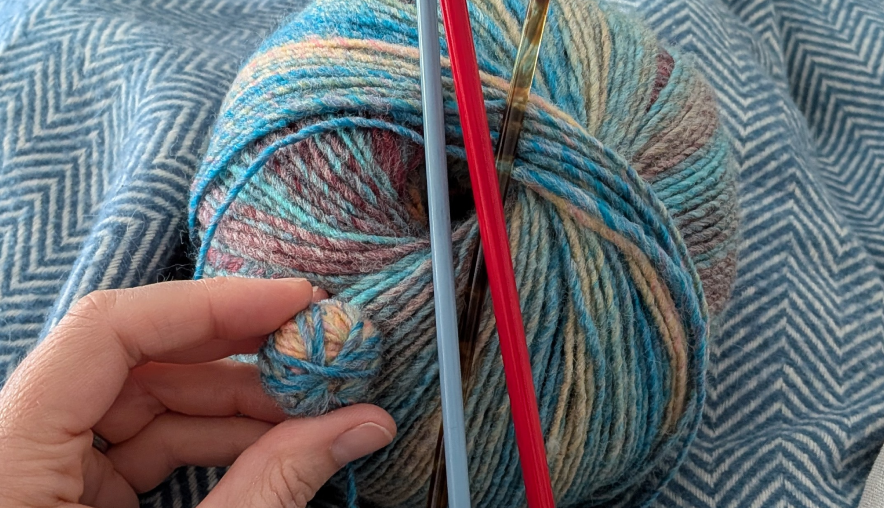
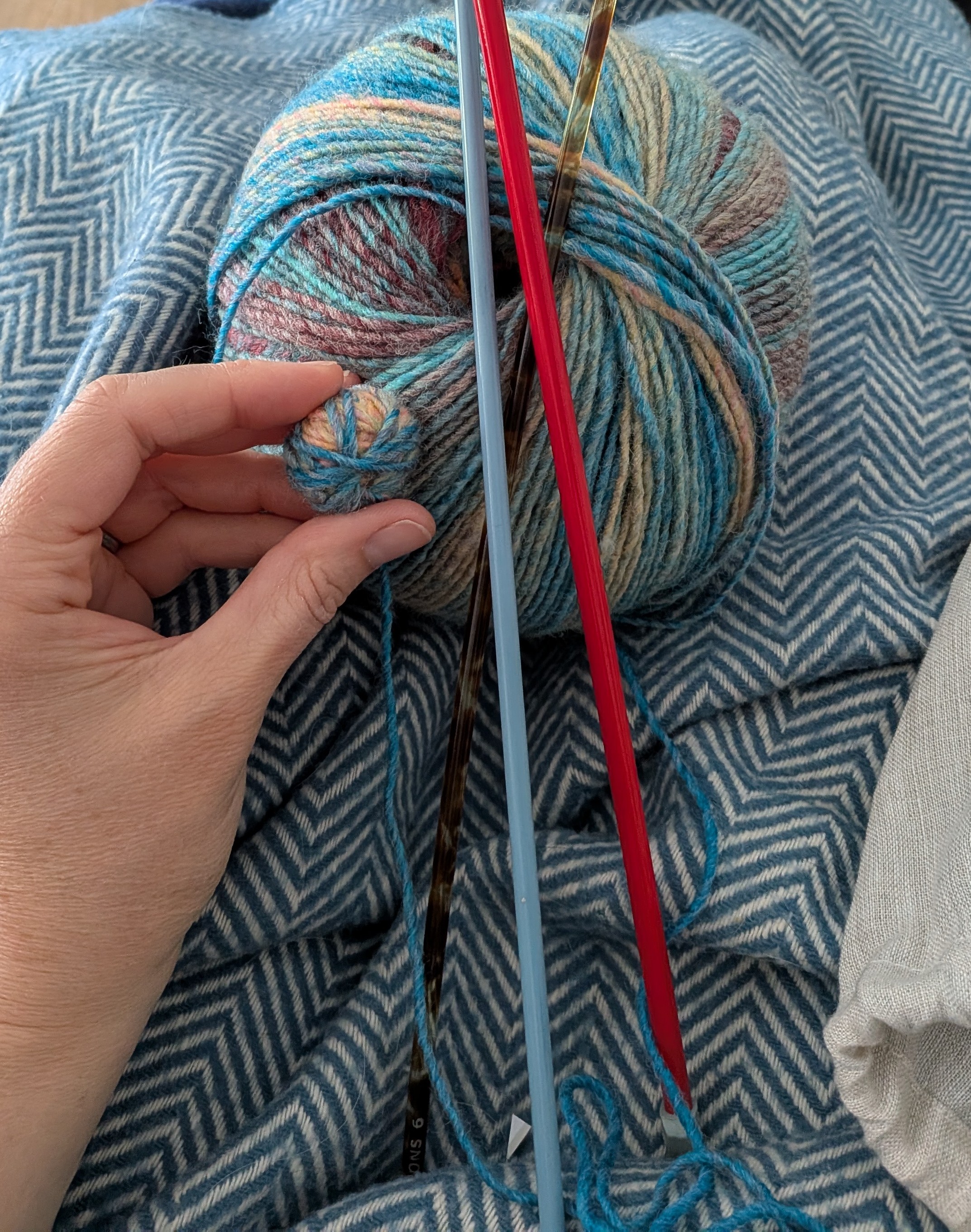
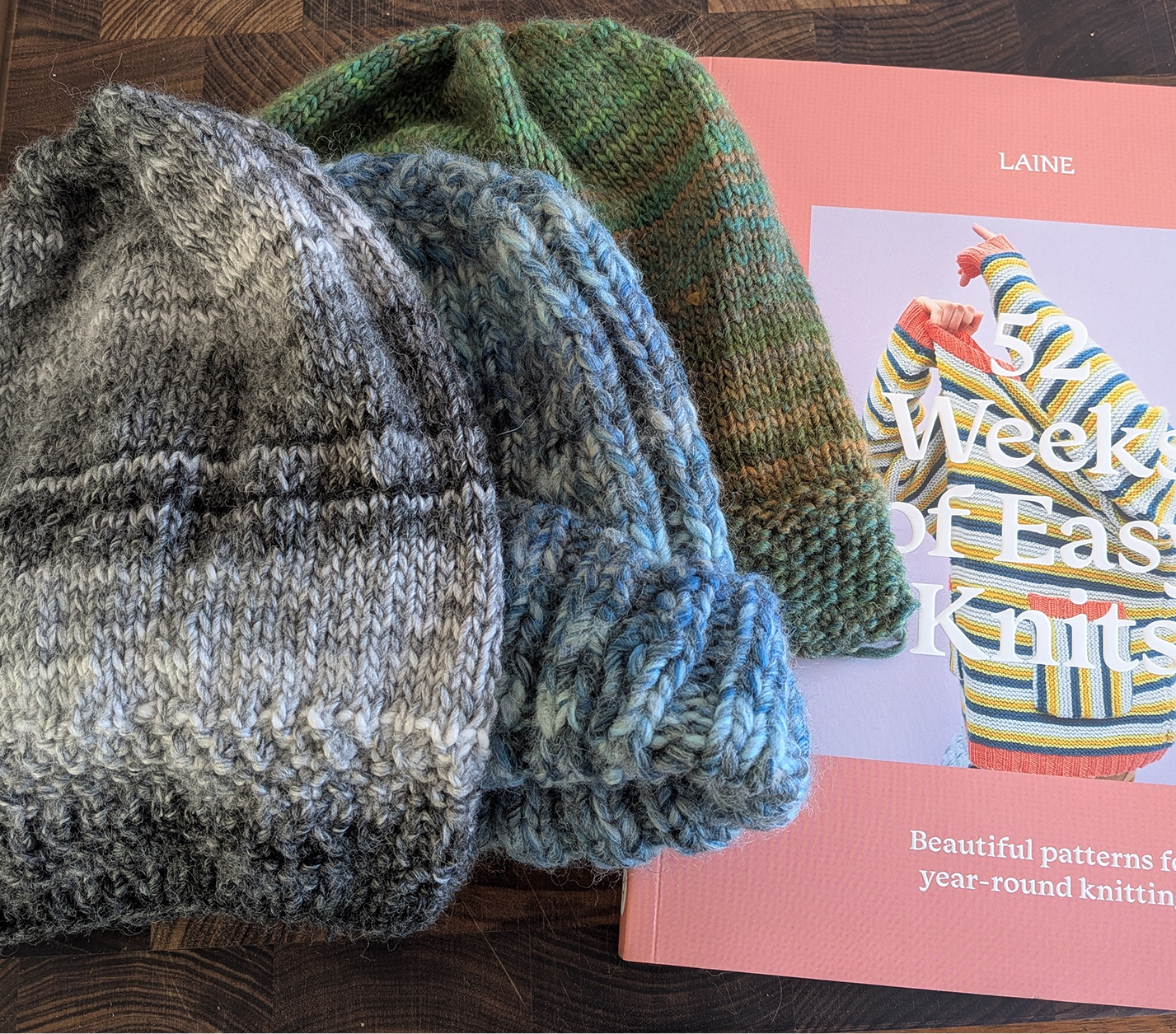
"I had lost the ability to find joy and the ability to think I would ever feel it again," she reflects. "Now there's hope, excitement, prospects. I've got new hobbies, I started knitting!"
Near the end of the programme, Greer tried a glass of red wine, the flavour profile she'd once loved most. The one she'd spent years developing an appreciation for.
It tasted like poison.
"Why did I ever think this was nice?" she wondered, genuinely baffled. "Why did I spend so much time acquiring a taste for poison? There's no logic in that. It sounds insane to me now."
Her view of alcohol has completely changed. She now notices how common it is in everyday life, in media and social settings. She also sees how much mental effort it once took to think about drinking, including when, what, and how much to drink.
"It removes all that," she says. "I have decision fatigue as it is. I'm so much better off without it. I almost feel lucky. I don't have to stress about it anymore."
You have to do it, to feel it
When asked what she'd tell someone who's scared of what life might look like without alcohol, Greer’s answer is characteristically direct.
"You don't realise the impact until you stop. You have to do it to feel it."
Before she quit, she thought she needed alcohol. Believed it was helping her cope with trauma, with pain, with stress, with everything. Those were the stories she told herself.
"But I can tell you: you get your life back in every aspect. You just get so much more back than alcohol ever gave you."
For Greer, accepting that she had a problem with alcohol was the hardest step - admitting it to herself, not just to others.
"Denial can be so strong," she reflects. "I felt like I was clinging so tightly to the denial like it was life and death. For me it was because of the judgements I unconsciously placed on myself - the shame of being weak, of being controlled by a substance."
But once she took a leap of courage - not wanting things to get worse, recognising the progression of dependency and tolerance, noticing how she was starting to think about drinking all the time - and acknowledged she had a drinking problem, the hardest part was over.
"Then I could start challenging my shame," she says. "And with my nurse's help and that of the group, I realised there are many factors in our biochemistry, neurotype, trauma, mental health, upbringing - so many things that can predispose us to falling into this unhealthy coping mechanism trap. And then there is the fact that drinking is so highly ingrained in our culture."
She wants people to know, especially healthcare workers who might be reading this, wondering if it's okay to seek help - that alcohol dependence doesn't look the same for everyone. You don't have to be drinking specific quantities or experiencing severe withdrawal to have a problem worthy of support.
You don't have to wait until you're "bad enough." If alcohol is playing a role in your life that concerns you, that's enough.
"Trust the process," she advises. "Surround yourself with positive people. Remember: progress, not perfection."
If you're worried about how you will fill your time or keep your mind busy without alcohol?
"Ask yourself: if you could do anything, what would you want to do? For me, it was learning to knit. Find something that gives you satisfaction, keeps your hands busy, replaces that habit with something meaningful."
She pauses, then adds something that surprises even her:
"And know that it won't feel like a sacrifice. It'll feel like freedom."
Today, Greer is thriving. More present in her relationships. More capable at work. More hopeful about the future. The gutless robber no longer has a hold on her.
"I thought I needed alcohol to cope," she reflects. "But what I've learned is that I cope so much better without it. Life is genuinely better on this side."
If this story brings up difficult feelings for you, or if you or someone you know is struggling, support is available. Please contact Samaritans on 116 123 (24/7) or visit samaritans.org.

James' Story
"It took priority over everything"
For more than twenty years, alcohol had what James calls a dominant role in his life - and for most of that time, he was in denial about it.
"I had quite a few people tell me, or hint at it, show a lot of concern - probably those closest to me," he says. "But the dominance led to me putting that aside and not wanting to acknowledge it."
An average day ran to a fixed pattern. He'd go to work, and on the drive home he'd already be thinking about the first drink. "It would take priority over everything else," he says. "It was almost a subconscious acceptance that what I was doing was okay. I justified it to myself. Very selfish in hindsight, but at the time you don't acknowledge it."
He'd been exposed to heavy drinking from a young age - the Australian culture of the late 90s and 2000s, then the wining and dining of semi-corporate work. "My personality was always about excess," he says. "I would never have any control over that - but I never understood that I had no control over it. It just was what it was."
The father my kids deserved
The heaviest cost was at home.
"If your wife's crying because she doesn't think you're going to be around for long for your boys," he says, the weight of it still audible, "I didn't respond to that as well as I should have. And that sits with me every day."
It was the small moments with his kids that cut deepest. A call to come and pick them up, and an excuse as to why he couldn't.
"They called you because they wanted your help. You said you can't, and you told them a lie. And then down the track they comment and say, 'We know why.'"
At that time, James was drinking seven days a week, the same time, the same amount - but it crept further, and the broken promises began to compound. ‘I'm going to try and stop’, he'd say, and the next day be back to the status quo. Eventually people stopped believing him. And somewhere in there he entered some genuinely dark places.
"You actually thought, there's no way out. I'm letting everyone down. I can't get out of this." If there's a message he wants people to hear from that stretch, it's this: "It's okay to not be okay. But self-medicating with alcohol is not the way out."
"It doesn't discriminate"
He'd tried the traditional route. His GP told him the obvious - he was drinking too much, his blood tests were through the roof, liver damage on the horizon. "Funny enough, that was never enough for me." Cutting down never held either; he'd buy one bottle instead of three and simply go back out for more.
By the time Clean Slate came up, he was, in his words, facing an uphill battle with no idea which way to go.
It reached him through a mutual friend - a healthcare professional who was a client of the clinic herself, and who mentioned it to James' wife.
"She's a professional in health services. So it just goes to show - it doesn't discriminate."
What convinced him was that it was believable, in a marketplace full of quick fixes that aren't. It mattered, too, that one of the co-founders had been through it themselves. The cost gave him pause until he did the maths on what he was already spending on alcohol and cigarettes - and the first consultation surprised him.
"I thought it'd be really clinical and impersonal. It was quite the opposite. It was really human." For the first time, he says, he had hope - "which I had zero of up until then."
Breaking the habits
"The hardest thing... is breaking habits," James says. He'd been so deep in routine that the first question was simply what to do with himself.
The support was there to fill the gap: nurse appointments already booked in advance, someone to call when he got stuck, and immediate access to peer-supported group meetings - rooms full of like-minded people at every stage, from two days in to a couple of years, where you can talk as much or as little as you like under a facilitator’s guidance. In his sessions, he and his nurse worked through the challenges, named the little wins, and treated setbacks as something to respond to rather than fear.
"You look forward to reporting on how you've been going. If you say everything's still the same, they get blown away. They get excited with you."
"Three bottles of wine a day for as long as I can remember. To nothing." Nearly twelve months on, he hasn't touched a drop, or wanted to.
What he hadn't expected was the clarity. With the drinking gone, he realised most of the problems that had been giving him grief had been created by the very thing he'd given up.
"It's like a reset button. Like turning over a new piece of paper, with no writing on it."
That blank page scared him at first - he'd only ever known one way - but once the broken sleep, the morning anxiety and the cloudiness lifted, he had energy to channel back into the things that mattered: relationships, work, hobbies.
A whole new life
That energy found a home in something he'd always loved: barbecuing.
What had been feeding family and friends has become a professional pursuit. James now leads barbecue masterclasses across Sydney, and shares his tips, tricks and recipes on his Instagram and Facebook pages. He's being invited to work alongside heavyweights in the industry and trusted with their brands - the kind of thing, he says, he simply wouldn't have had the motivation for a year ago.
He's also made his sobriety public, and been struck by the response. The fear that had haunted him before he stopped was social: ‘no one's going to invite me anywhere because James has stopped drinking’. It turned out to be unfounded.
"The people I was worried about were actually my biggest advocates behind the whole thing."
His advice to anyone in the same spot is to tell the people closest to them what they're doing, and why. "Knowledge is power. And then they will support you a hundred per cent."
Professionally, too, the clarity let him make changes he'd been too scared to make - leaving a job he was only staying in because the routine propped up his old habits, and following an instinct he now trusts. "I'm more present, more motivated, more driven," he says. "It's changed my life in ways I could never comprehend."

"Make that call"
James's closing message is about the hardest part of all: the first step.
He suggests starting with honest self-reflection - taking a real look at what's working in your life and what isn't. "You'll probably find the what's-not outweighs the what-is. If you can do that, you're on the right track."
And then, simply, reaching out.
"When you're addicted to something or entrapped, the hardest part is making that first step. There's no shame in it. If anything, it's the biggest thing you could be proud of."
Asked whether he'd recommend it after nearly twelve months, he doesn't hesitate. "I can confidently say it's the best thing I'll ever do. So have no shame, don't look back. Make that call."

If this story brings up difficult feelings for you, or if you or someone you know is struggling, support is available. Please contact Samaritans on 116 123 (24/7) or visit samaritans.org.
The Silent Crisis: What New Research Reveals About Alcohol Harm in the UK
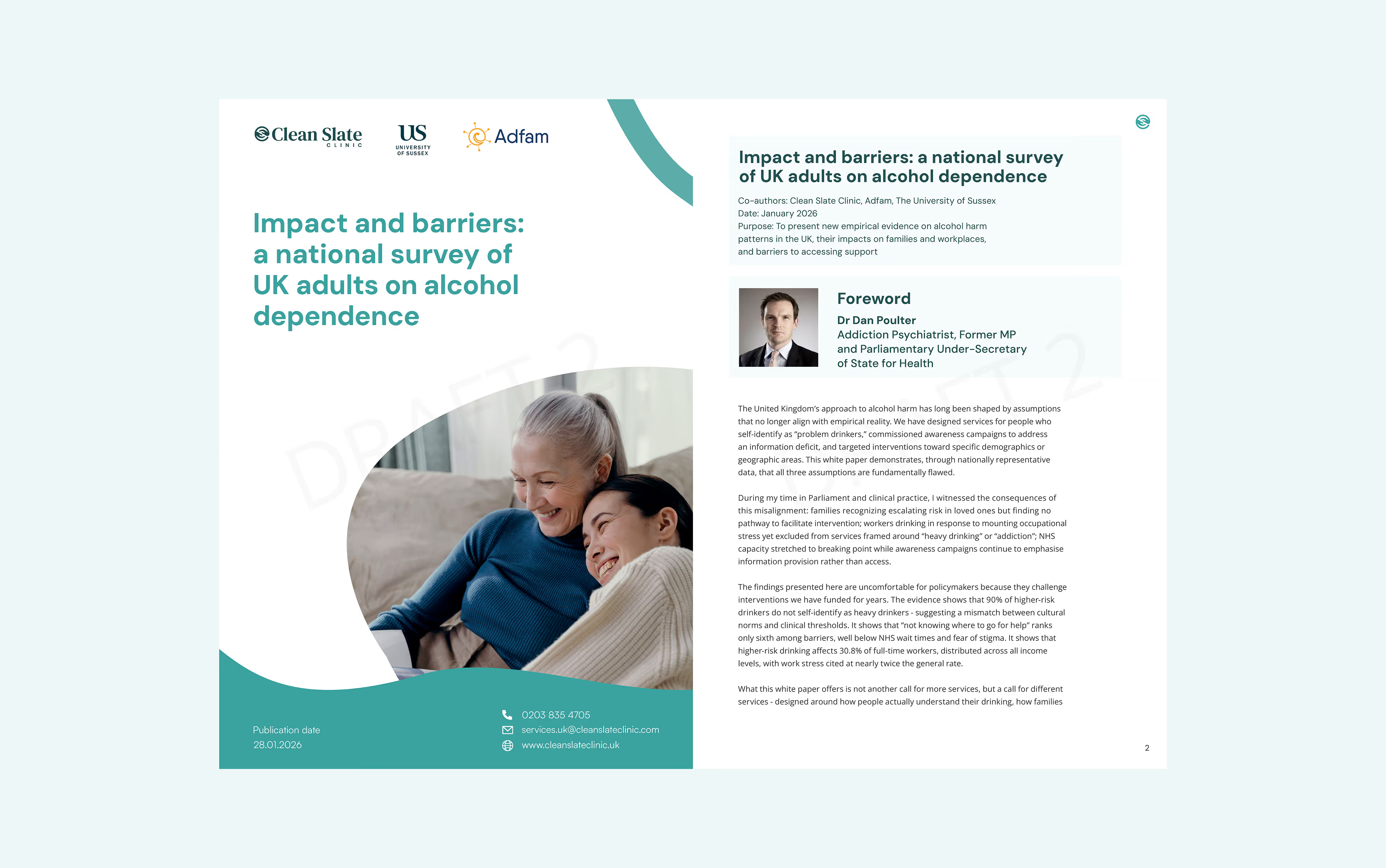
Clean Slate Clinic, in partnership with national addiction charity Adfam and the University of Sussex, published a landmark white paper on alcohol dependence in the UK, launched at a panel event in London in January 2026, chaired by leading addiction psychiatrist Dr David McLaughlan and featuring former Health Minister Dr Dan Poulter. The research, based on nationally representative polling of over 2,000 UK adults, set out to understand why alcohol harm continues to rise even as average consumption falls, and what needs to change.
The headline finding is that nine in ten people drinking at clinically risky levels don't consider themselves heavy drinkers. This isn't denial. It's a structural problem. Most people measure their drinking against those around them, not clinical guidelines, meaning millions of people are at risk without knowing it. Hospital admissions for alcohol-specific conditions remain at nearly 340,000 a year, and the economic cost to England is estimated at £27.4 billion annually.
For those who do recognise a problem, the barriers to getting help are significant. Long NHS waiting lists, fear of stigma, and the cost of private treatment are the three biggest obstacles, not lack of awareness. This means information campaigns alone won't close the gap. What's needed are services that are discreet, affordable, and accessible without requiring time off work.
The research also sheds light on who is most affected. Almost a third of full-time workers meet clinical criteria for higher-risk drinking, including many earning £50,000 or more. Work stress is the most commonly cited reason for drinking among this group, nearly twice the general rate. And the problem is evenly distributed across the country and across political constituencies, meaning it cannot be solved by targeting specific regions or demographics.
The white paper concludes with a clear call to action: alcohol services need to move away from crisis-led, in-person models towards earlier, digitally-enabled intervention. Medically supervised home detox can reduce the cost of treatment by up to 85% per episode compared with inpatient care, while allowing people to get support without stepping away from work or family life.
For a deepdive into these issues the full paper is available here.

Alice Hansen on alcohol, identity and recovery
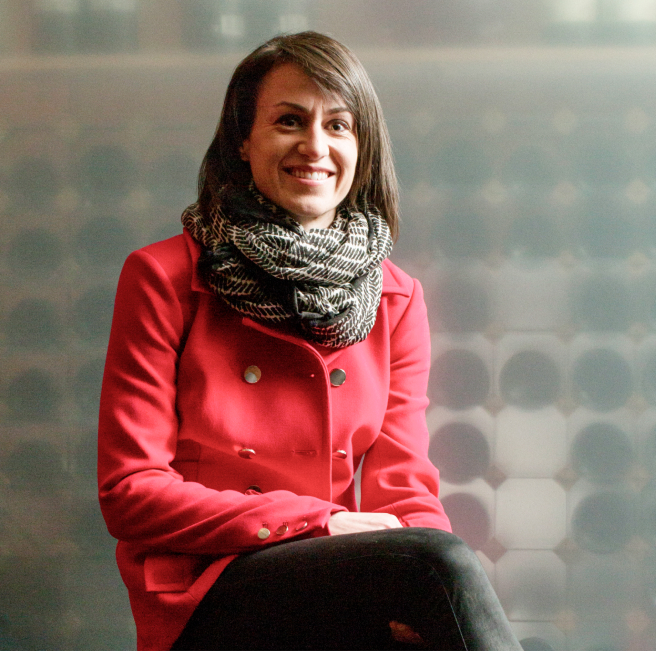
Alice Hansen had every outward marker of a full life: a tennis scholarship to America, nearly 20 published books, a home featured on Grand Designs Australia. Behind closed doors she was hiding bottles in washing baskets and had been admitted to rehabilitation 26 times. Writing in Mamamia, she traces her dependence to adolescence, growing up gay in 1990s Tasmania where it was still illegal, and turning to alcohol as a mask for the identity she felt she had to conceal. Over two decades it quietly became the answer to every uncomfortable emotion.
What changed was not just willpower but the quality of support. Hansen credits 12 months of consistent, non-judgemental care with finally ending the cycle, alongside therapy that shifted the underlying beliefs driving her behaviour. Since 2019 she has not set foot in a rehabilitation facility. She now runs marathons, leads immersive wellness retreats in Tasmania, and writes about her island as a proud seventh-generation local.
Read the full story in Mamamia.

Pia's Story
Pia grew up in Guernsey and, like many of us, was introduced to alcohol at a young age. By the time she entered the corporate world, drinking wasn’t just normal - it was expected.
“Corporate culture celebrated burning the candle at both ends - work hard, play hard - but no one talked about the personal cost. The access to free alcohol was out-of-control. I could attend a booze-laden client or internal event every night - and was often expected to. Add to this the frequent travel, with airport lounges opening their bars up at lunchtime - next time you’re in an airport lounge mid-afternoon, look around - you’ll see dozens of men and women in corporate wear making repeated trips to the bar.”

On paper, Pia’s life looked perfect. A thriving career in healthcare consulting. Leadership roles. The kind of CV that sparkles. But inside, it was a different story.
“I was excelling professionally, ticking all the boxes, but internally I was struggling. Despite working in the healthcare industry for 20 years, I had no clue how or where to look for help.”
By late 2019, she was drinking 1-2 bottles of wine a night. Sometimes she hid it by pre-loading before events. Other times she poured white wine into a mug during Zoom calls so it looked like tea.
“I distinctly remember sitting in an afternoon Zoom meeting, drinking white wine from a mug and realising that this really wasn’t normal.” The shame was crushing. “There’s still so much stigma for professionals struggling with alcohol. It’s terrifying to think that being honest about it could cost you your career.”
For Pia, there was no dramatic rock bottom. No single incident that forced her hand. Instead, it was a series of quiet realisations - small moments that added up to a truth she couldn't ignore for any longer.
In 2020, after years of pushing herself to breaking point, Pia walked away from her corporate career. She and her fiancé packed up their lives, grabbed their dog, and set off in a caravan to explore Australia. At the same time, a piece of fate landed in her lap. Her best friend, Dr Chris Davis, asked if she’d help him get his virtual dependence treatment model off the ground. He had no idea that she was struggling with the exact same issue herself.
Testing the program was a wake-up call, particularly when Pia discovered that she met the criteria for a medicated detox. “That shocked even me,” she admits, now understanding the extent of her alcohol dependence. She then became “patient zero” in what would later become Clean Slate Clinic.

Pia went through detox and a full 12 months of aftercare. It wasn’t easy - recovery rarely is - but what surprised her most was how quickly the benefits began to appear.
“I knew I needed to stop, but I had this deficit mindset, which was ‘I need to stop because I’m tired of being tired, I’m scared of my increased cancer risk, I’m scared of my increased dementia risk, I’m getting older.’ I really hadn’t thought about the good stuff that would come. And there’s just so much good stuff, quite quickly as well. My anxiety, which was one of my main causes for picking up the bottle of wine every night, just disappeared. You feel this sense of control over your life. Life isn’t rainbows and unicorns all the time, but you can cope with everything so much better when you have clarity and good quality sleep.”
One of her favourite quotes sums it up with humour and truth: “I’ve never met a person who says they wish they’d stayed up later and drank more the night before.”
Today, Pia’s life feels grounded in purpose. She’s grateful for the unexpected chain of events that gave her the support she needed - support she didn’t know how to find, even after two decades in healthcare.
“I’m incredibly grateful for the serendipitous events that led to me getting the support I needed - I really don’t know where I’d be today had I not had that opportunity. I’m happy in the purpose I’ve found at Clean Slate Clinic - helping others in a similar situation brings me a lot of joy. Addressing my alcohol use has taken me on a journey of self-discovery that has brought me clarity, purpose and peace.”

She’s honest that life isn’t perfect. She still struggles with overcommitting and setting high expectations for herself - but now she has healthier ways to cope. Recovery didn’t erase life’s pressures, but it gave her the tools to face them head-on.
If you see yourself in Pia’s story, know this: recovery isn’t about what you lose - it’s about what you gain. Better sleep. Less anxiety. More peace. A sense of control you might not even remember having.
“There’s so much good stuff on the other side. I never expected that. And I wouldn’t trade it for anything.”

Calls for better support for LGBTIQ+ communities on substance use
SBS News recently explored the barriers facing LGBTIQ+ communities when it comes to seeking help for alcohol and substance use. The feature includes the story of Andrew Addie, who lived with alcohol use disorder for more than a decade before finding the right support, and a conversation with our own Dr Chris Davis about why culturally safe, accessible care matters and why the current system isn't meeting demand.
It's an important listen, and one that reflects why we built Clean Slate the way we did: remote, private, and designed to meet people where they are. Read the full story in the SBS News.
.svg)



Ready to get started?







%20(1)%20(1)%201%20(1).png)